
Think of something you’ve known how to do for a while—performing a certain lift, swinging a golf club, grilling the perfect steak. Now think about the last time you watched someone who’s really good at it.
Did you notice anything from watching them that you hadn’t noticed before?
That happened recently with two TNT members. Neither is a stranger to deadlifting—one has trained here for a couple of years, the other for nearly ten. Both of them generally looked fine in their setups—but the weights at this point in our current program are fairly heavy, and I thought they could each benefit from dialing in a little more. So we spent a few minutes talking about wedging (pre-tensing the working muscles and removing slack before a lift), and I showed them a short video of me doing it before a heavy(ish) deadlift the prior week.
On their next sets, both of them looked noticeably tighter in their setups. And both said the same thing afterward: the lift felt stronger.
Nothing about the deadlift was new to either of them—we had discussed wedging before. What changed was what they could see after having gained some experience.
The learning cycle doesn’t end when you’ve “learned” something
Most of us learn a lift (or any physical skill) the same way. A parent, teacher, coach, or friend demonstrates it. We try it. The instructor corrects something, we try again, and the cycle repeats until we can do the movement reasonably well.
Then, for most people, the watching stops. Once we know how to do something, we just continue doing it the same way.
But watching someone do a skill well is a different experience after you’ve practiced it for a while.
The first time around, you’re simply trying to get a rough picture of the skill—learning how the movement feels and aiming to do it safely and proficiently. Then after some time (days, weeks, months, or years, depending on the skill), you become familiar with it. At that point, your experience often enables you to watch a more advanced practitioner and recognize the finer details that you need to implement to progress up the skill ladder.
That’s what I saw specifically with the ten-year member. She didn’t need to learn how to deadlift again. She just needed one more look at a detail that had been too small to stick back when other things mattered more.
Why dialing in technique matters
It would be easy to file this under fine-tuning that’s only useful for advanced practitioners. But at any level in strength training, small improvements in technique add up to something much bigger (figuratively and literally): how much weight you can lift safely. A tighter setup means less slack to fight, a smoother lift, and less chance of losing position under a heavy load. And being able to move more weight safely, over time, is what drives results.
Here’s the clip I showed them:
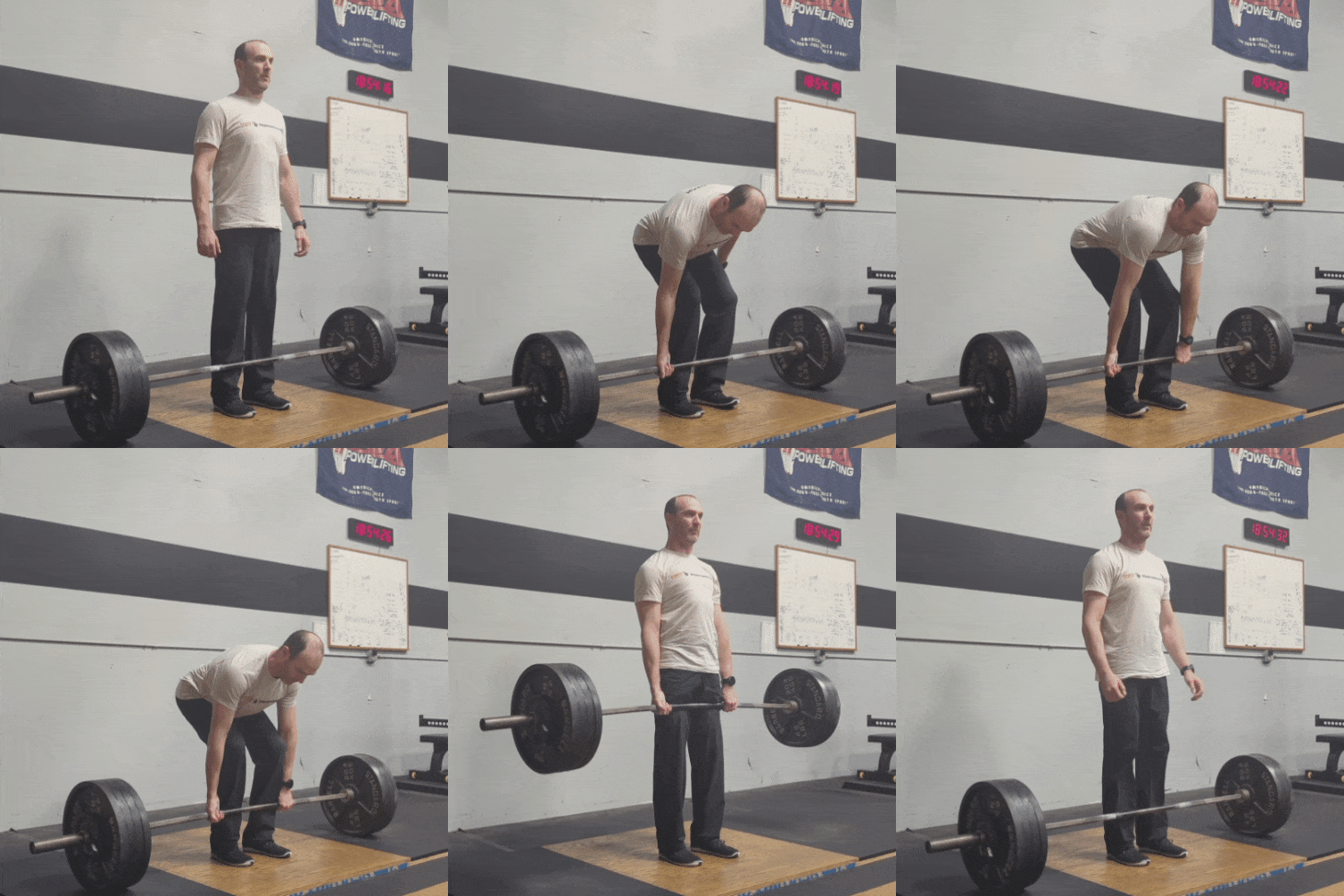
If you deadlift, watch the setup more than the lift itself. (Not that you need to imitate my setup—everyone has their own style—but rather to see the tension that’s developed in the process.)
My lats and abs engage during the initial shoulder “roll”, with the abs remaining engaged throughout the entire setup. The grip is intentional (right hand first, then left) and tight. The shrug → anti-shrugs help me ratchet down the lats and abs even more—and take out the tiny bit of slack in the bar. And, when I start to pull, the bar leaves the ground right away without the hips rising first.
As I’ve mentioned before, it’s the same setup routine I use on every weight, light or heavy—which is a big part of why it holds up on the heavy reps. And it developed via the combination of lots of practice and watching others throughout my learning process (and still to this day).
Putting it into practice
Pick one lift or skill you already know how to do, especially one in which you have enough experience that you don’t think much about it anymore.
Watch someone who does it well, and look for one thing you think you could refine in your own practice. If it’s a deadlift, the clip above works. For anything else, ask a coach to demonstrate it for you.
Practice it again right away with that one thing in mind. Bonus points if you record yourself, watch it immediately, and then try again after you’ve seen it with your eyes instead of just in your mind. (Watching yourself is less about learning the skill and more about seeing where you think you’re doing something but actually aren’t [or vice versa].)
And remember to repeat the process occasionally. What you notice will change as you improve—which is exactly the point.