
No, I’m not talking about lifting with a wedgie but rather wedging prior to lifting anything heavy.
What’s the difference?
As you probably know, a wedgie involves misaligned undergarments. Alternatively, wedging involves pre-tensing any muscles that are about to be worked (including the prime movers and the stabilizers) and removing excess slack from the body.
To understand why doing this is stronger and safer than not doing so, let’s briefly recruit your imagination and then review a visual example.
Slack and instability
I’d like you to imagine two scenes.
The first scene involves one car pulling another using a tow strap. When the towed vehicle applies its brakes, the strap remains taut as both vehicles come to a stop. Because there’s no slack in the system, a smooth acceleration occurs when the towing vehicle once again begins to move.
At the next stop, the driver of the second car is distracted and applies the brakes after the first car has already begun to slow. This time when both vehicles stop, the second car ends up a few feet closer to the first. If the driver of that car doesn’t notice and quickly accelerates from the stop, the second car will be jerked forward (or lose its bumper) as the tow strap rapidly tightens from its now-slack state.
In the second scene, two cranes are lifting heavy steel beams. One crane sits on an enormous slab of concrete while the other rests on a slightly sloping beach immediately next to the lapping tide.
Of course, the first crane lifts and maneuvers its beams with a lot of efficiency because the foundation on which it’s working is flat, hard, and stable. But the second crane isn’t so lucky. As it lifts and maneuvers its beams, sand squishes out disproportionally from underneath it causing it to tip slightly, move slower, and burn more fuel.
The concepts from these two imaginary scenes similarly apply to us when we strength train. When we’re loose and unstable—whether due to squishy shoes, unengaged muscles, or improper set-up (as you’ll see below)—lifting heavy objects will require more energy and promote jerky movements which have the potential to cause injury.
Alternatively, when we wedge—that is, when we pre-tense the muscles that are about to be worked and remove excess slack in our set-ups—we’re more likely to be smoother and more stable in our movements. And that equates to lifting heavier weights, safer.
A common deadlift example
Wedging will look and be applied differently depending on the lift being performed.
For example, wedging during a military press (i.e. standing, vertical press) requires engaged quads, glutes, abs, and lats and a strong connection between the working elbow and torso. In a back squat, it requires engaged abs, lats, and traps plus a slight, downward pull on the bar. In the deadlift, as you’ll see below, wedging requires engaged abs and lats plus elevated hips without rounding of the lower back(!!!).
Because details vary between lifts, the example below is meant more as a primer for understanding than specific “how-to” instructions. (If you’re interested in the latter, there’s nothing like a little personal experimentation and practice or some in-person coaching.)
The not-so-good example:
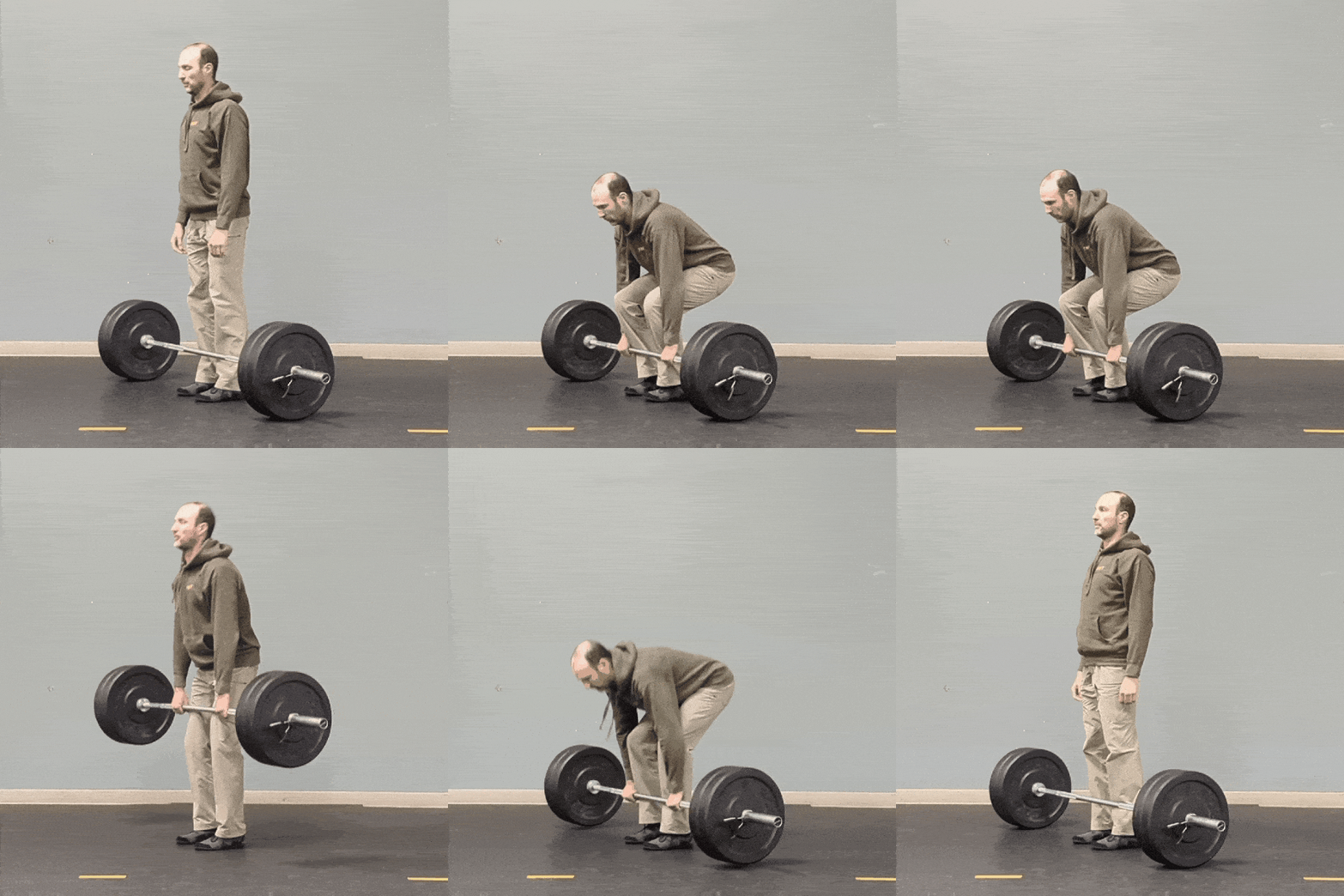
In the video above, the main point to notice is that, when I start to lift, my hips raise noticeably before the bar leaves the ground. This is a case of having too much “slack” in the system.
I was still able to lift the weight because it’s well within my capabilities. However, I’ve seen this type of movement cause two different issues when people lift maximal or near-maximal weights.
The first issue when someone moves like this is mental: When they start to lift and their hips rise without any movement from the bar (and because the weight feels heavy), they simply quit because they feel outmatched. In some cases, these folks might have actually been able to safely and successfully complete the lift had they just continued pulling.
That said, the second issue arises in some cases when they do continue pulling: They’re momentarily surprised and lose tension in their abs. This causes their lower backs to round (if even slightly) and increases their risk of injury.
In either case, the better answer is, of course, wedging.
The better example:
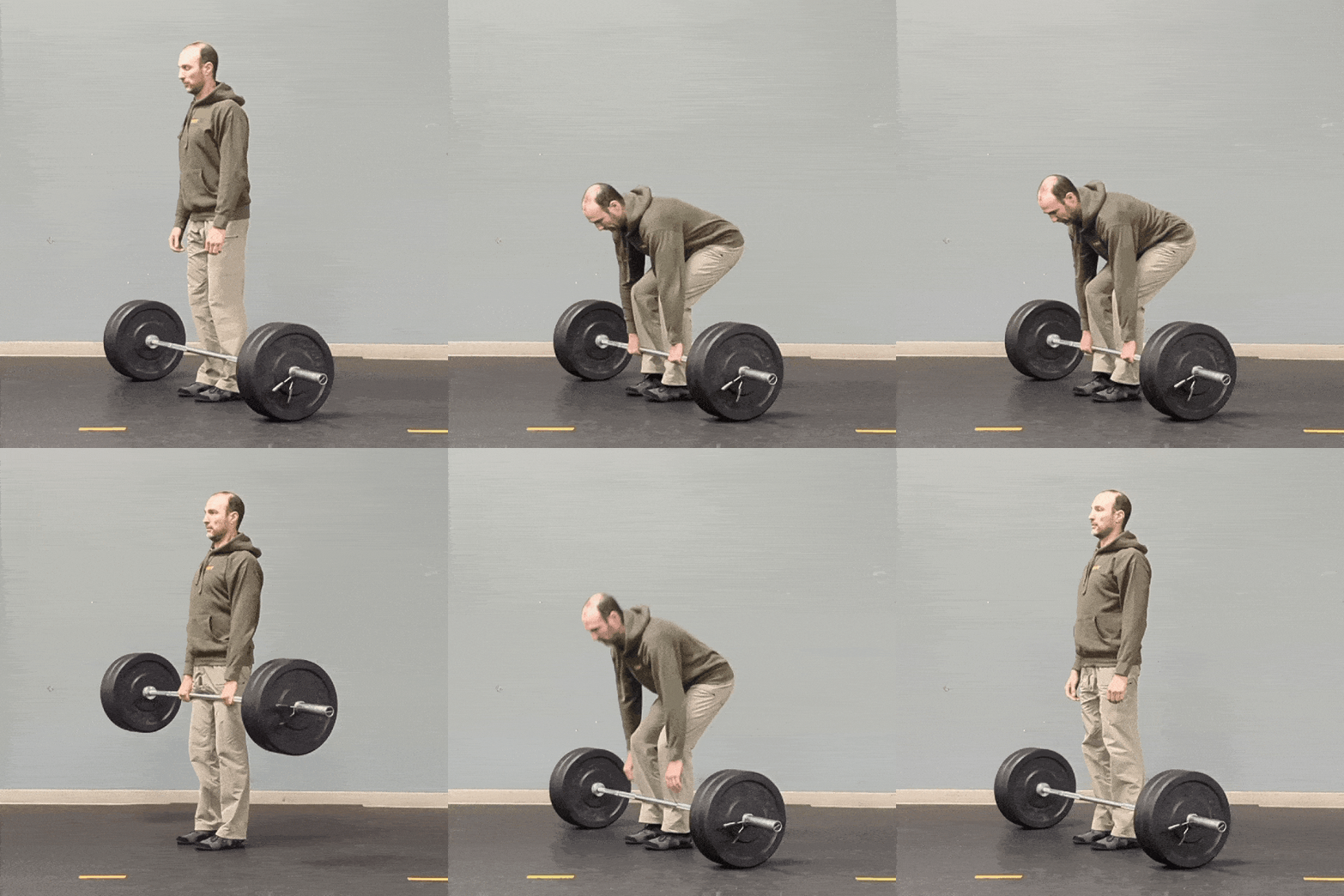
In the video above, you’ll notice that my hips are higher during the set-up (causing greater tension in my hamstrings) and that I actively engage my abs and lats prior to lifting. (Note the anti-shrug → shrug and slight backward shift onto my heels.)
The two simple visual cues indicating I’m “fully wedged” are that, as soon as I start to lift, there is no extraneous movement and the bar immediately leaves the ground. (On a near-maximal lift, there might be a slight delay in the bar leaving the ground. However, there still will not be any other extraneous movement other than tension-induced shaking until the lifter quits or the bar begins to move.)
Putting it into practice
Whether you pick up heavy stuff at the gym or only when helping friends or family with projects, make a special note to practice, practice, practice(!) whenever you have the opportunity.
Wedging will make you stronger (thereby making the work feel easier) and reduce the potential for injury. And since simple skills/habits like this are just as easy to do as to not do, you might as well be stronger and safer!