
Last weekend was the 4th Annual Wood Splitting Day at my dad’s place.
Throughout the year, he cuts fallen or dead trees on his land and stacks them in a pile near his woodshed. Then a bunch of us gather on a day in early November to help him split all of it in preparation for his winter heating needs.
In total, there are usually 10–12 people helping:
- 1–3 using (manual) splitting mauls
- 2 using hydraulic splitters
- 1–2 queueing up the next pieces to be split by the hydraulic splitters
- 1–2 loading the split pieces onto the old hay elevator which drops the pieces into the shed
- 2–4 stacking the pieces in the shed
This year we crushed it, splitting 10+ cords—a cord is 4x4x8 ft. (height, width, length) of split and stacked pieces—in about 4½ hours.
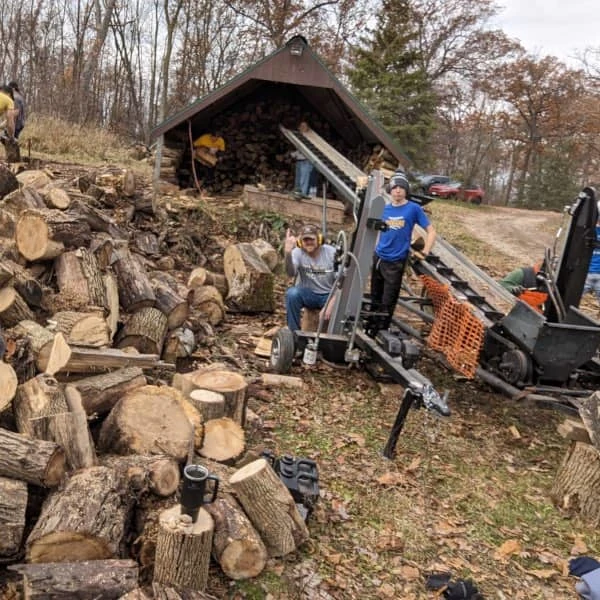
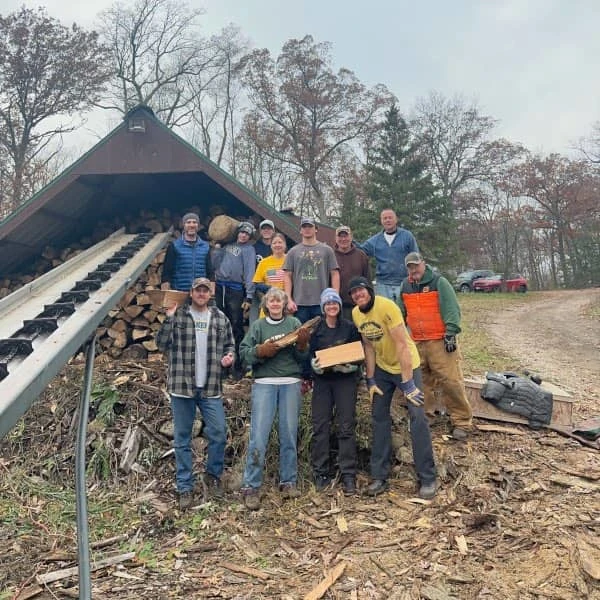
As you might expect, I enjoy doing some of the manual splitting work. It’s a great form of exercise that’s quite fulfilling. It’s also a reminder of one of the reasons I train in the first place: to be able to help friends or family with physically demanding activities without feeling like I was run over by a truck the following day.
That reminder was even more pointed this year because about 30 of the pieces that Dad had set up to be split by hand were rather large and dense, which meant that they required above-average effort to split.
Of course, that effort reminded me about similarities to fitness (and success in just about anything), especially in our modern world.
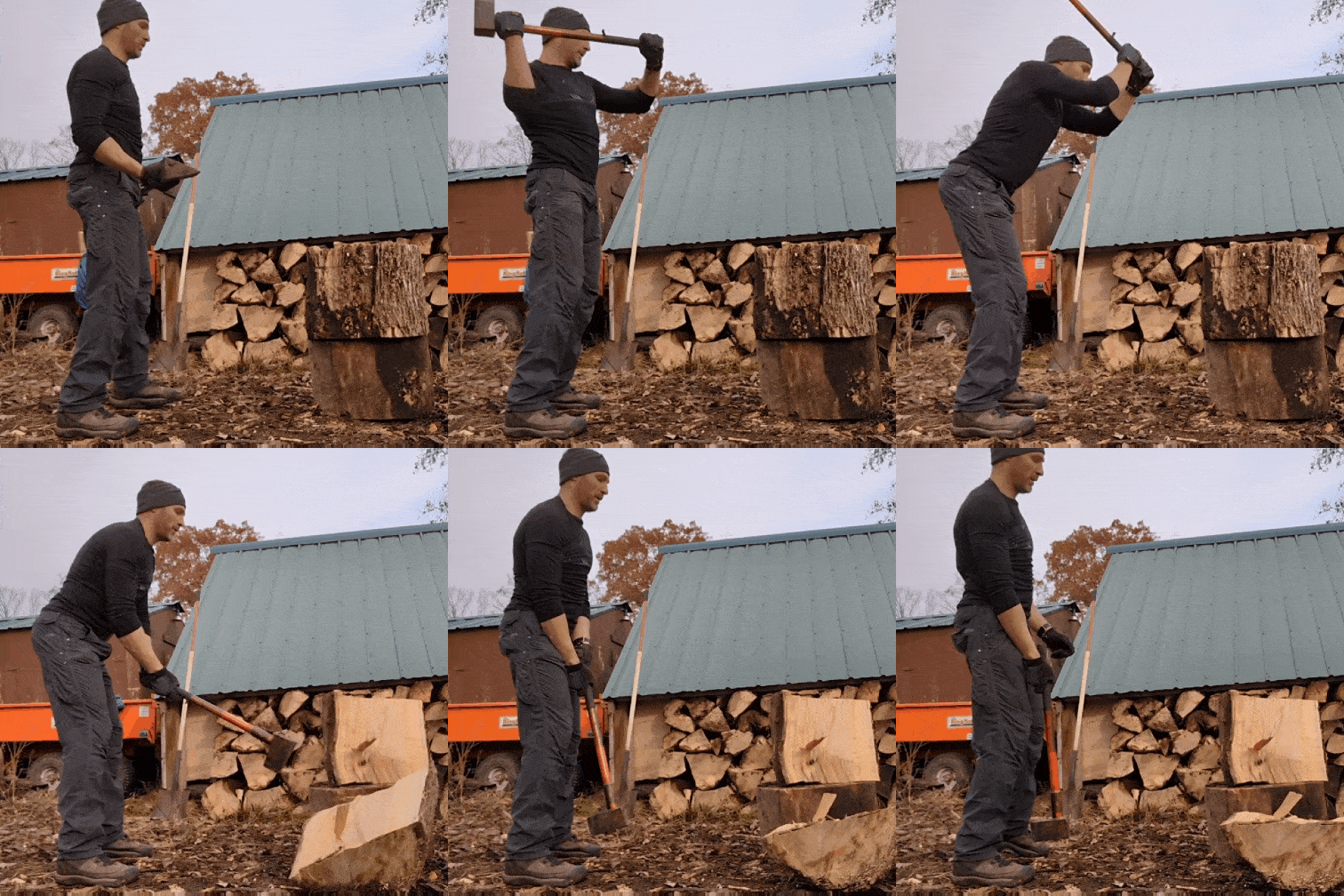
Images and videos in a similar vein as what’s above are the ones that typically show up on social media, the news, or the cover of our favorite magazines. Because of the ubiquitous nature of these types of media and our typical roles as casual observers, it’s easy to assume the perspective that splitting a large chunk of wood with a single swing (or building a successful business, relationship, skill, or admirable set of abs) is easy, effortless, or due to luck.
When the amazing pattern-matching blobs that are our brains assume that perspective over and over and over again, they can easily begin to think that things are supposed to be easy. And even that there might be something wrong with us when we struggle to achieve similar outcomes.
But the fact of the matter is that nothing is really easy, effortless, or completely due to luck. When we zoom out to see more of the story (instead of the highlight reel) and become deliberate observers, we can begin to appreciate the work that culminated in the “effortless” outcome.
That approach itself takes effort. But it also serves to remind us to be more trusting of, patient with, and dedicated to the process, that everything worth achieving requires effort, and that the effort is what makes the outcome fulfilling in the first place.

Putting it into practice
Now that we’re getting into “cooler, leave home and work in the dark, almost holiday” season, it can be tougher than normal to stay consistent with our nutrition and exercise practices.
But if putting consistent effort into following a process is what leads to the eventual achievement of our worthwhile goals, then now is also a great time to re-commit to both following a process and reviewing strategies that can help.
With those goals in mind (and especially if you’ve recently started receiving these weekly tips), you might consider checking out some past tips on:
- How to Make New Behaviors Stick
- Why Play Isn’t Just for Kids—and Still Matters for Adults
- WOOP: A Practical and Effective Motivation Tool
- Practice Doesn’t Make Perfect—It Makes Progress
Of course, all of this assumes that you have a goal and a process to follow. If that’s not the case, we can help with that…