
Which of these two gentlemen do you think is stronger?
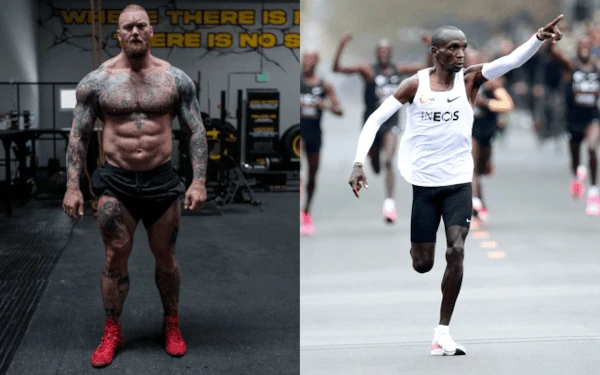
If we’re talking about mental strength or grit, it might be a toss-up. But if we’re talking about physical strength, I doubt that anyone would hesitate to say that Hafthor is stronger, if for no other reason than because he’s bigger.
(I’ll let someone else argue whether deadlifting 1124 pounds requires more or less grit than running a marathon in under two hours. Both are impressive accomplishments.)
Equating size with strength is common, for good reason. Throughout most of our lives, we observe that bigger people tend to be stronger: Our parents are bigger and stronger than us when we’re young. Bigger kids at school are usually stronger than smaller kids. And people at the gym who look like they live there typically lift more weight than the person with noticeably less muscle mass who started showing up a month ago (although kudos to that new gym-goer for starting).
But what many people don’t realize is that a muscle’s size is actually a small part of the strength equation. The bigger factor is the nervous system’s ability to utilize the muscle. Because the nervous system is involved, that means strength is effectively a skill that can be trained.
And that means we don’t have to be big to be strong. Unless we want to be, of course. But that involves a nutrition discussion that’s best saved for another time.
So for now, how do you train to be strong?
The obvious answer is to practice picking up heavy stuff and to continually refine your practice as you progress. But you already conceptually know that if you’ve read either of those prior two tips.
What I want to do today is to offer a visual example which also connects to last week’s idea of reducing the variability of action in order to build habit. (A lot of ideas and results connect through the nervous system!)
Treat every weight like it’s heavy
When we learn any new skill, development happens quicker when we’re intentional about practicing easier and harder sub-skills with precision. In other words, we don’t sloppily practice the easier sub-skills because they’re easy; we practice them with precision to reinforce good habits.
The same idea applies when we’re “learning” to be strong. Lifting lighter weights with the same levels of focus and precision as heavier weights teaches the body exactly what needs to be done regardless of the weight.
For four months prior to setting my deadlift PR, I applied that concept every single time I picked up a barbell. Here for example of what works best for me, not necessarily for you to precisely follow, is the set-up routine I used on my warm-up, working, and back-off sets:
- Step up to the bar with my right foot first, then my left.
- Roll my shoulders into a packed position and tighten my glutes (butt), abs, and lats (back).
- Hinge to the bar, grabbing it first with my right hand and then with my left.
- Shrug & reverse-shrug twice along with two sharp inhalations.
- Lift.
When I finally stepped up to the bar that was holding my PR weight in competition, I had practiced that technique hundreds of times with light, moderate, and heavy weights. And although the competition weight was (obviously) heavy, nine years later I can still remember how smooth standing up with it felt.
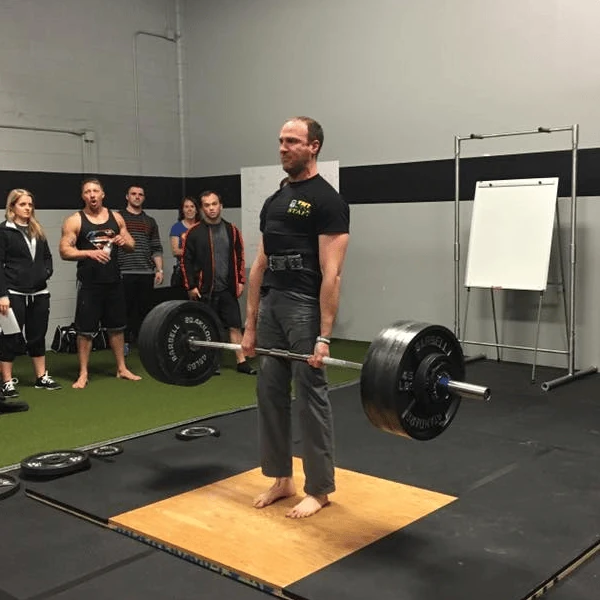
I’ve recently started to deadlift again after working on other things for a long while, but that pattern was so engrained that picking it up again was like riding a bike.
Here are a couple examples of the routine in action.
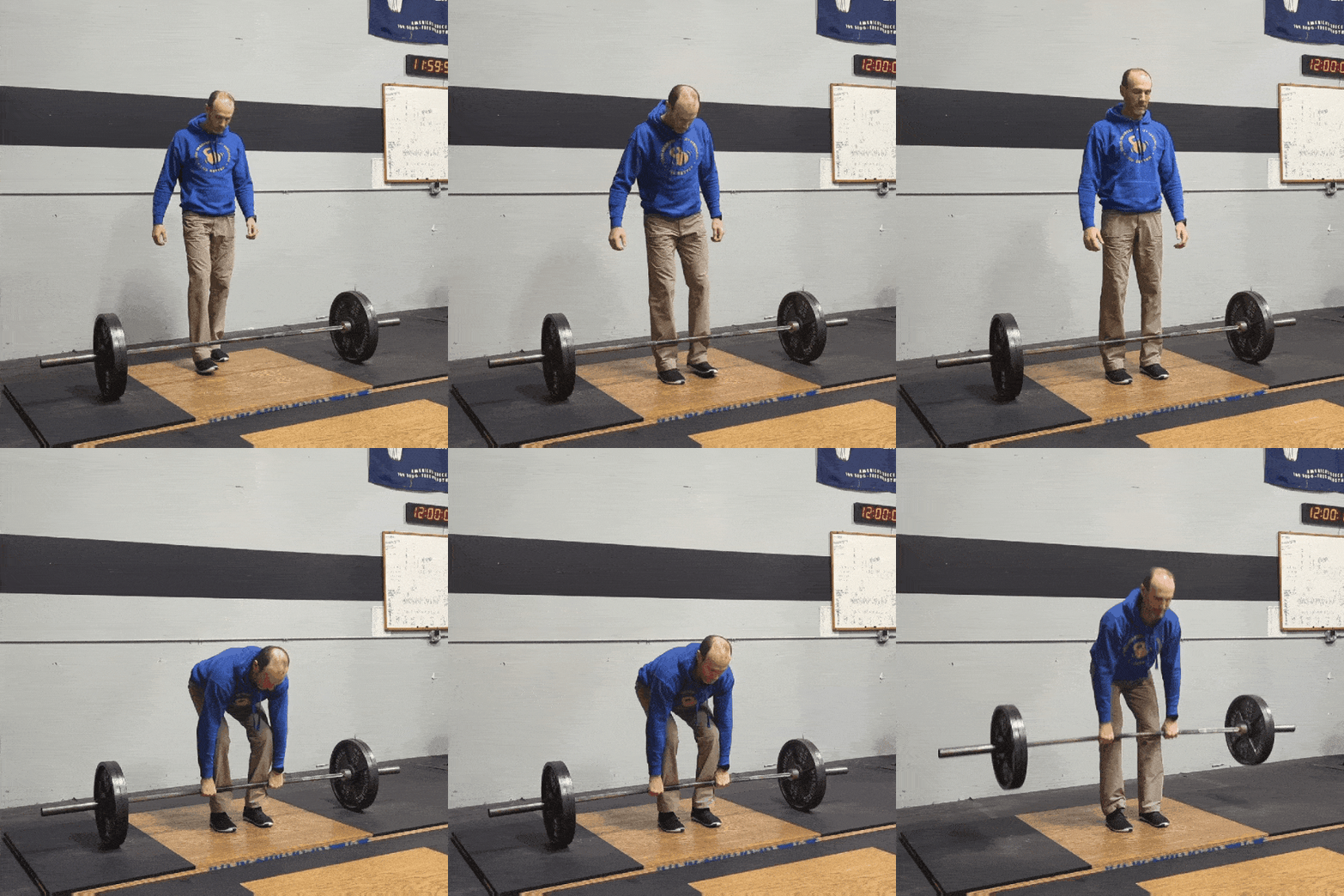
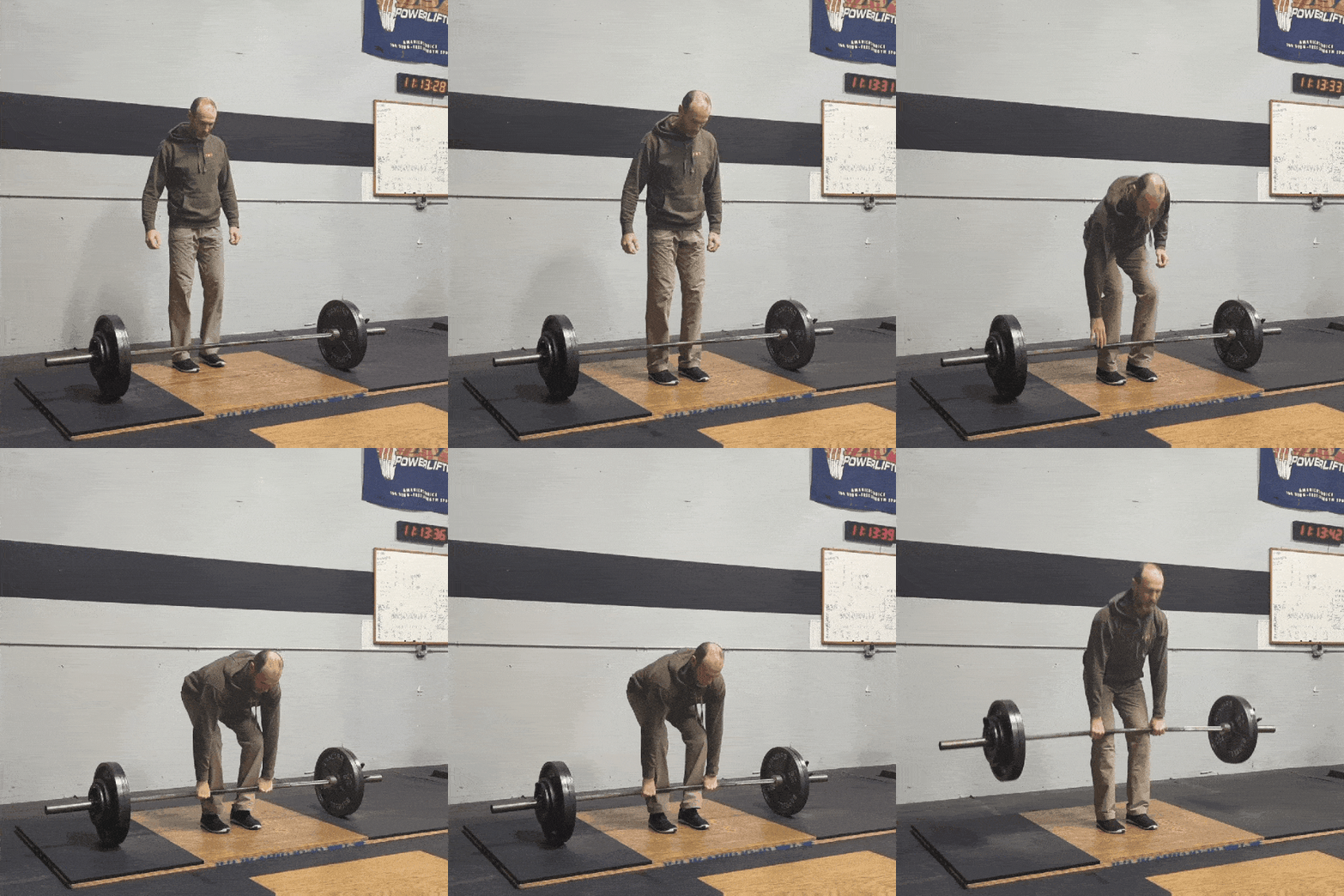

Ultimately, my point today is not about a specific deadlift technique but rather the idea that dialing in, systematizing, and consistently executing an effective routine is the best strategy for building habits and skills (including strength) that last a long time.
And, specifically regarding strength, that you can apply the strategy to build a very high level of skill without needing to look like Hafthor.
Putting it into practice
When you train this week consider how you approach every set of every lift. Do you consciously have a routine? If so, does it always look as close to the same as possible, or does it vary based on your mood, level of fatigue, or the weight you’re lifting?
If you don’t have a routine, develop one. And don’t worry about it being “perfect”. You can refine it over time. If you do, your strength with develop with it.