
Kettlebells have been my single favorite training tool since 2007 when I used one for the first time.
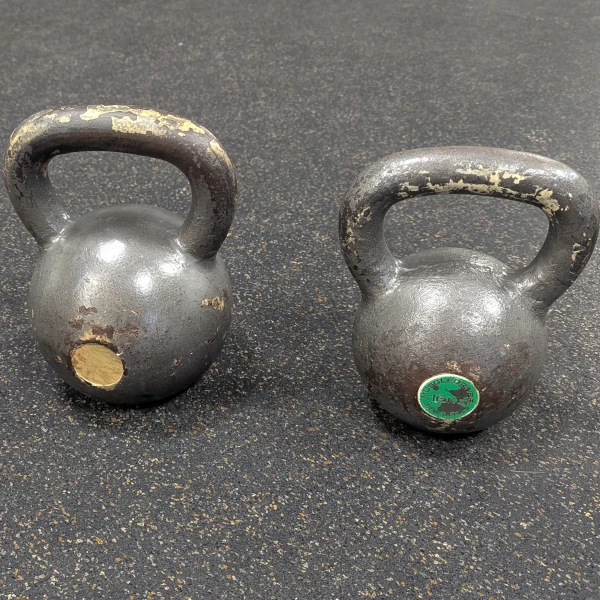
They’re unique, effective, fun, versatile, and quite durable, due to the characteristic of having zero moving parts. (I’m looking at you, treadmill!) In fact, you might recognize these two if you train at TNT. They’re the first ones I bought.
Perhaps my favorite characteristic is their versatility.
As a beginner, you could easily use a single kettlebell for both strength and endurance training. At the intermediate level, two bells of different sizes (or a single light bell and a pair of heavier bells) would get the job done. And even at an advanced level, a minimalist but effective set-up could be four: one light bell, a pair of medium bells, and one heavy bell.
Of course, it’s easy enough to add more if you have the desire and a tiny bit of space, but that’s a completely optional luxury even at an advanced level. (For reference, it’s a luxury to which I have subscribed. But that’s what fanatics do. 🤷♂️ Still, the dozen that I have at home today take up a whole eight square feet.)
If you’re considering adding some (more) kettlebells to your home gym but you either don’t want to devote extra space or think you’ve outgrown or will quickly outgrow smaller sizes, here are three simple ways to squeeze more results out of your “beginner bells”.
Grab a pair of kettlebells
For movements like swings or squats, it’s probably obvious that using two kettlebells would be more challenging than one because the legs are doing the work with an absolutely heavier weight. (Compare the Goblet Squat and Double Kettlebell Front Squat images in this tip about training principles.)
But pressing a pair of kettlebells is also more challenging than using a single kettlebell, for two reasons: First, a pair of bells is still heavier than a single bell and requires more tension from the entire body. Second, a pair of bells will not allow you to “cheat” by leaning away from the pressing arm when you tire.
And if you happen to be thinking that you can’t do this because you don’t have two bells of the same size, I have a surprise. Using “offset” bells—that’s a pair of bells of two different sizes—will challenge your stability (and abs) and is a perfect option for presses, swings, and squats.
Change the leverage of the kettlebell
Similar to the way doing a push-up on the floor is harder than doing a push-up with hands elevated on a bench, the difficulty of certain exercises can be changed by holding a kettlebell differently, thereby moving its center of gravity.
Check out the following GIFs of presses for an example. The “regular” Military Press is the easiest variation because the kettlebell’s center of gravity is lower. Even though the technique of the Waiter and Bottom-Up Press variations are mechanically the same, the lifts become progressively harder because the kettlebell’s mass shifts upward.
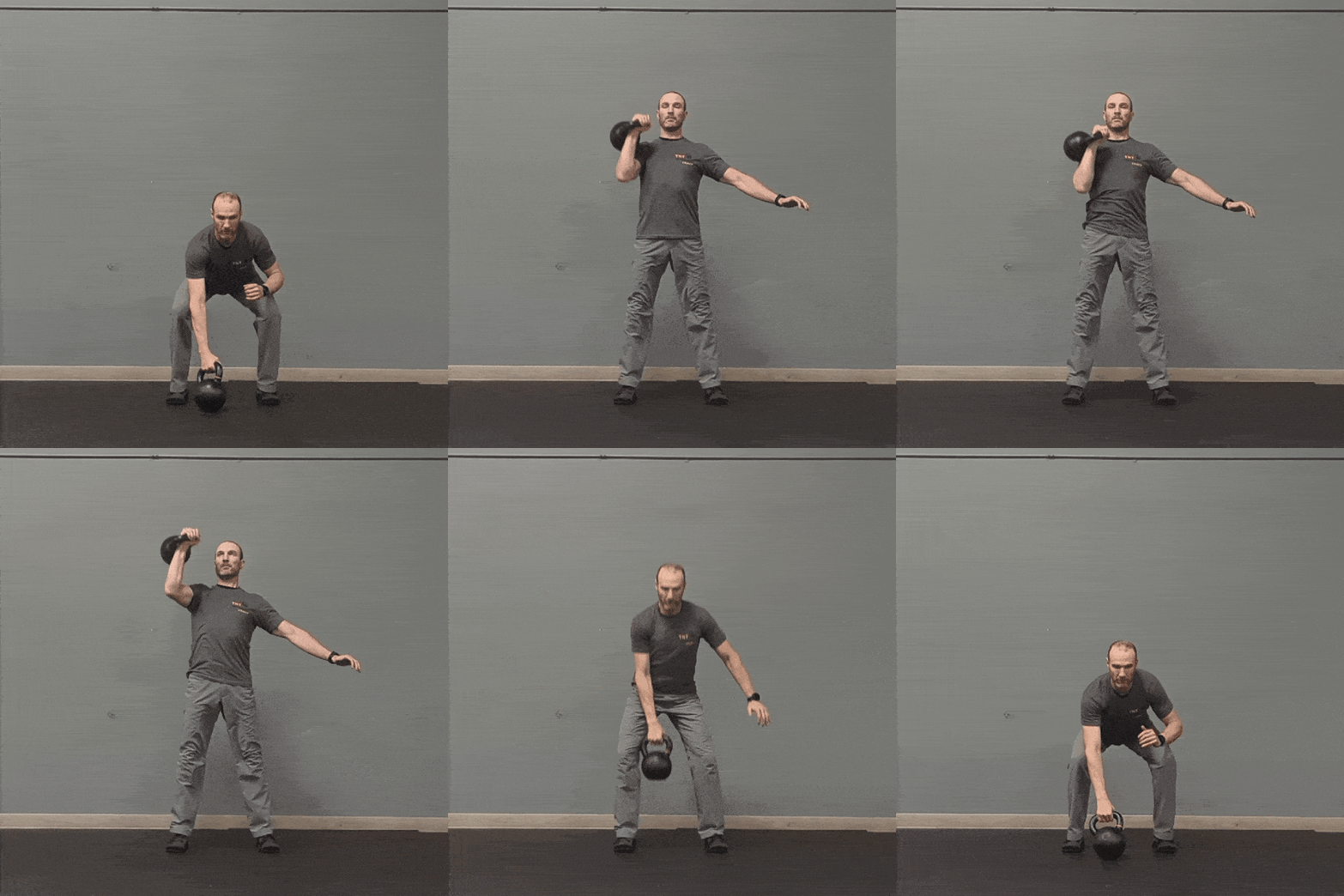
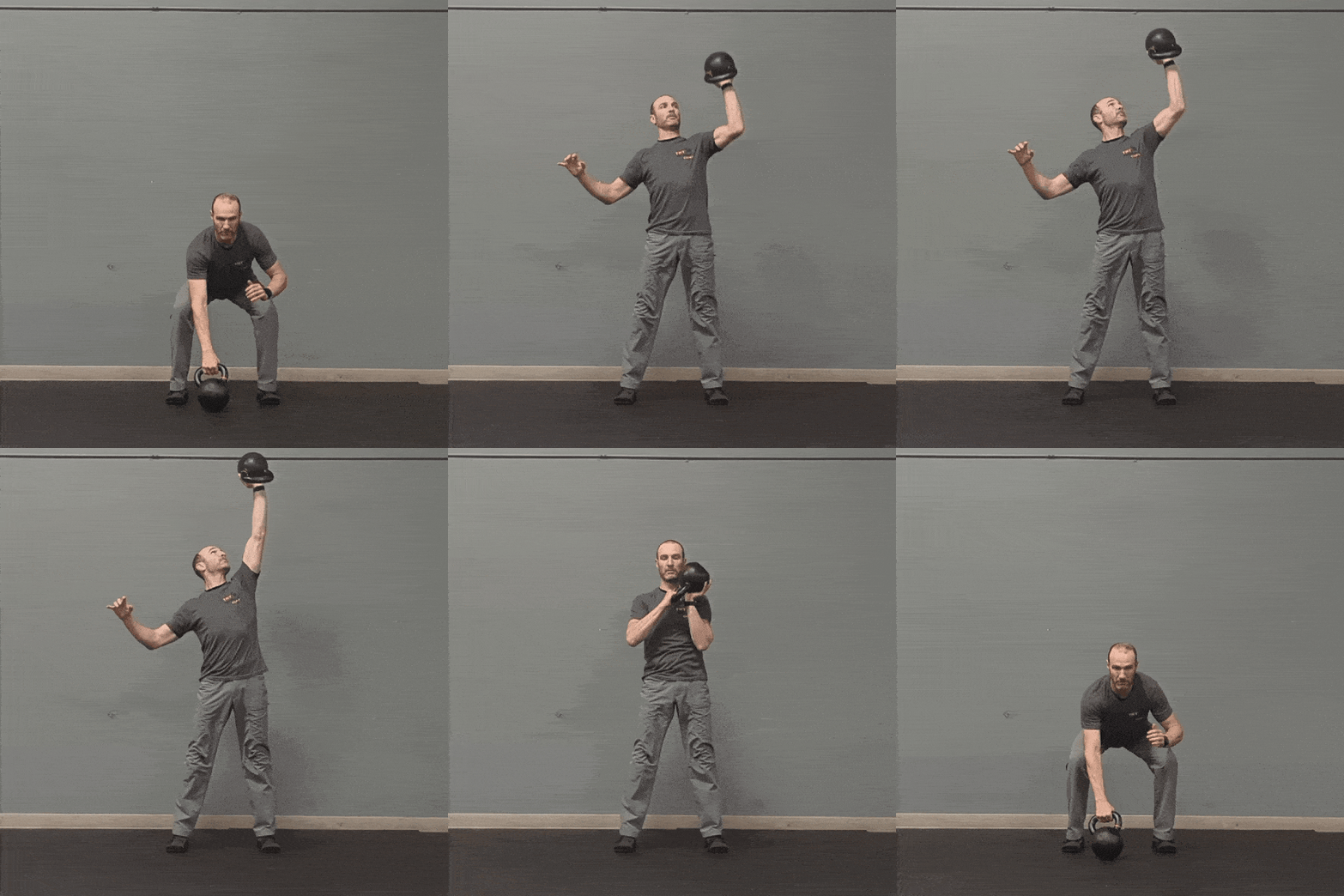
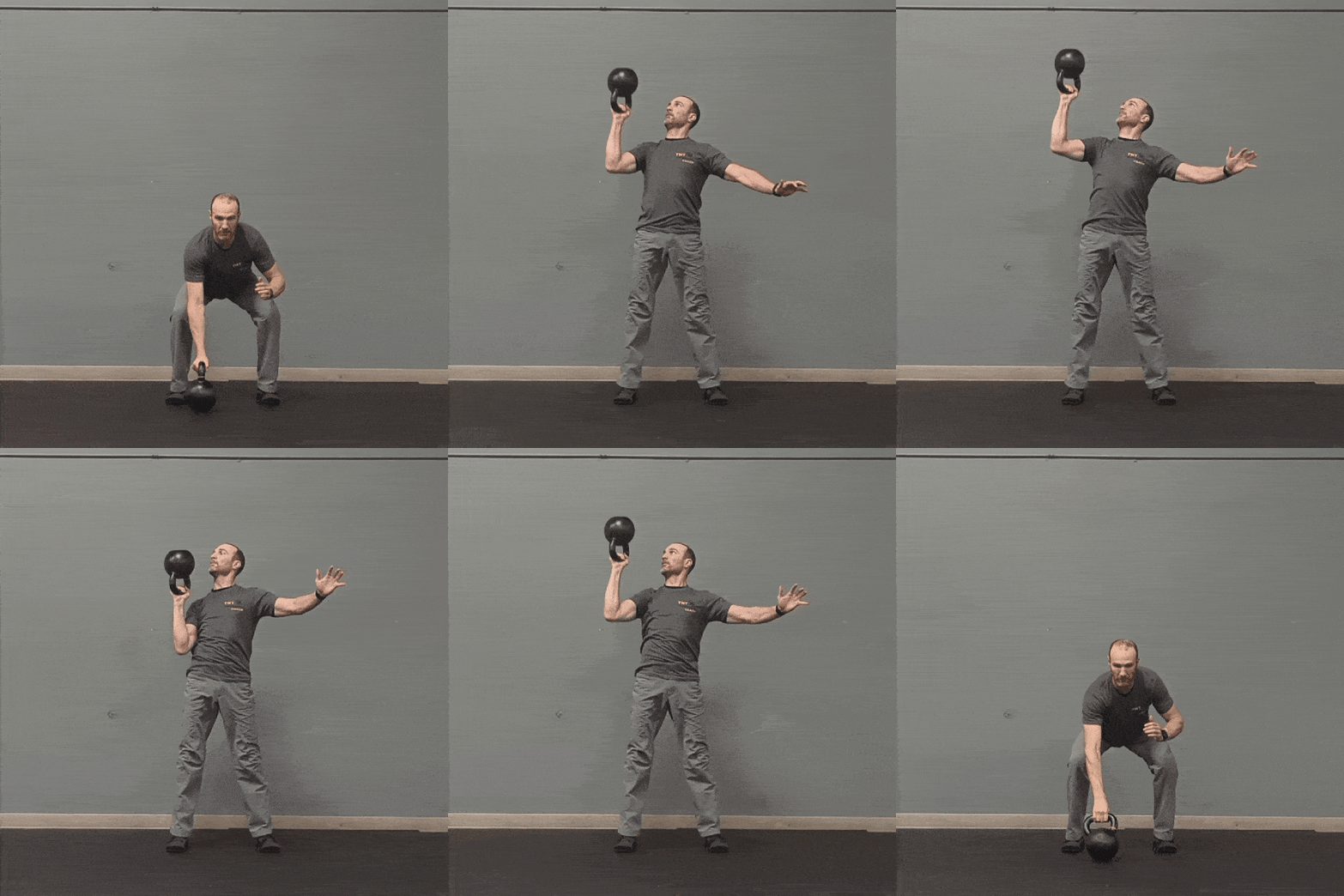
This strategy/grip can also be applied to single (or double!) kettlebell squats and, if you’re a little crazy, getups. While doing so may not change the difficulty as far as the legs are concerned, your entire upper body will notice a difference, even with very light bells.
(A word of caution: Don’t try these options for the first time while standing on your beautiful new hardwood flooring. Bells are much easier to accidently drop when using either of the latter two grips.)
Change the leverage of your body
The underlying principle of this tactic is obviously the same as the last one, but the mechanics are slightly different.
When we change the kettlebell’s leverage, the kettlebell looks different while the exercise looks the same. (The push-up example is similar: The push-up looks the same whether it’s done on the floor or a bench. What changes is the platform on which it’s done.)
In this tactic, the kettlebell will look the same while the exercise changes slightly. Two simple examples include:
- 1-Hand Swings (easier) → Snatches (harder)
- Goblet Squats (easier) → Lunges (moderate) → Split Squats (moderate-hard; this is like a lunge but with the back foot elevated on a box or bench) → Pistols (harder)
In both examples, the legs have to do a little more work either by projecting the bell higher (e.g. Snatch) or by performing the work unilaterally (e.g. Squats/Lunges).
And, ultimately, that means your “beginner bells” will be useful for just a little while longer.
Putting it into practice
If you train at TNT, you know the current plan makes use of some of these tactics. Not only does it keep things interesting, it also will have some surprising effects when we go back to lifting somewhat heavier weights.
If you train with kettlebells at home or elsewhere, try some of these tactics the next time you start a new program. Again, it’ll be fun, different, and surprisingly effective.
And if you don’t (yet) train with kettlebells, what are you waiting for? I’m kidding. But not really… 😉
But, seriously, give them a try sometime. They might just change your life!