
Last week I suggested adding some fast movement to your training and offered a handful of exercises that would fit the prescription.
While any of them (and others) will produce meaningful progress, I’ll also suggest that one stands out: the kettlebell swing.
Yes, I’m biased; I operate a kettlebell-focused gym, after all. But that doesn’t necessarily make me wrong! 
Compared to other exercises, swings:
- Are easier on the joints than running or jumping
- Are simpler to learn than snatches or jerks (using a barbell or kettlebell)
- Work the grip and posterior chain (hamstrings, glutes, lats, posterior deltoids) — muscle groups that are often neglected in training and daily activity already — more than push presses or thrusters
- Can be done with a single kettlebell that takes up less space (and costs less) than a rower or ski erg
Once you build up some capacity, you can also do a lot of them in a given training session using very high-quality technique and without feeling too smoked at the end. And since practice makes progress, there’s no better way to improve than to get in a lot of practice.
In any case, making the argument for swings being among the best fast-movement exercises isn’t the point of this tip. Rather, I’ll offer a simple strategy to fix one of the more common technical errors that are made when doing swings, should you decide to do them.
But before I get to that…
Some words of caution
If you either haven’t done kettlebell swings or have never done them in front of a qualified professional, please first spend some time learning the difference between a hinge and a squat, and practice some light deadlifting before trying to swing. Or better yet, get a lesson from a qualified pro!
Emphasizing a few key details when swinging makes the movement fairly safe, quite effective, and extremely awesome. On the other hand, missing those details can make the movement very (very) painful, a waste of time, and rather awful.
Hinging too early
Cautionary words out of the way, the technical error I referenced above is moving (hinging) the hips too early on the downswing. This causes the kettlebell to move in a sort of “J” shape, putting more strain on the lumbar (lower) spine and often causing more weight to shift to the toes instead of the heels. Besides messing with your balance, that weight shift also reduces the power output of the subsequent swing. Which kind of defeats the purpose of moving quickly.
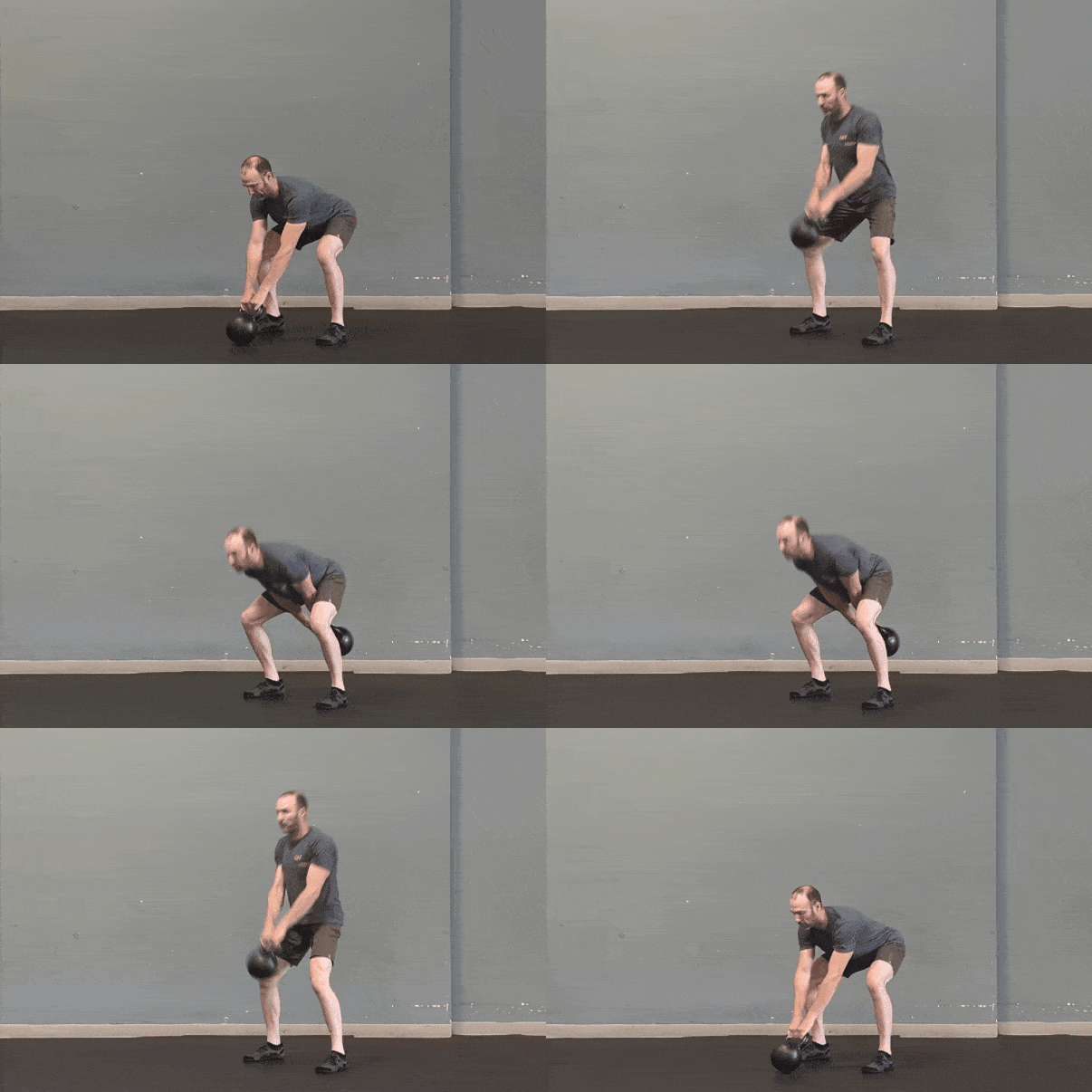
After watching the GIF above, you should probably have two questions:
- “How do I know if I’m moving my hips too early?”
- “How do I fix it if I am?”
The answers to both questions are fairly simple.
In the first case, make note of where the kettlebell passes between your legs on the downswing. If it’s below your knees, you’re probably hinging too early. (The best way to observe this is to record a video of you swinging so that you can see exactly what you’re doing, even if you don’t feel it while you’re doing it. Do not watch yourself in a mirror; that causes more problems than it solves!)
If you discover that you are moving your hips too early, you can fix the issue if you:
Squeeze your glutes… for longer than you think
The glutes (your butt muscles, in case you’re not a physiology fan) are hip extensors. Squeezing them like you’re delaying a trip to the restroom should cause you to fully extend your hips at the top of a swing.
If you squeeze them briefly and then relax, you’re much more likely to also begin moving your hips backward (and downward) too early in the process of the downswing. But continuing to squeeze them for longer than you think is necessary will keep your hips extended for more of the movement.
How long should you squeeze them? Until self-preservation tells you to move! 😉
Doing all of this will cause the kettlebell to travel in somewhat more of a straight line than the “J” shape caused by an early hinge and produce the opposite effects:
- More weight in the heels at the bottom, which enables you to produce more power on the subsequent rep
- Generally better balance
- A better (i.e. safer) alignment between your spine and the directional force of the kettlebell

Putting it into practice
Whether or not you currently use kettlebells, spend a few minutes reviewing the tip linked above about the difference between hinges and squats.
In my coaching experience, many people:
- Don’t currently do much hinging movement during training or everyday life
- Would greatly benefit from doing so
- Are often afraid of it because they’ve heard stories or personally experienced back pain while doing so
As I mentioned in that tip: “Hinging doesn’t hurt your back; the way you hinge hurts your back.”
I admit to having been in this category at one point in my life too. But learning how to hinge well has helped me become stronger and a better athlete. I have no doubt it’ll do the same for you.
If you do currently use kettlebells (and after reviewing the hinge/squat tip), check in with your swing technique the next time you do them.
Do you hinge a little too early? Or a lot?
No worries, if so. Just focus on squeezing your glutes for a little bit longer on each rep. Then double-check that you do the same when cleaning and snatching!
Your back, power output, and results will all be better for it.