
Plenty of information exists on the Internet about how to cut carbs, but I prefer to keep things simple. Here are six of my favorite ways:
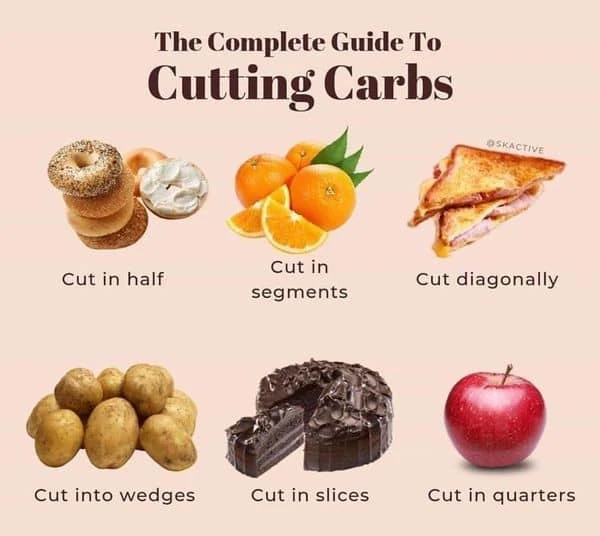
All joking aside, the human body needs carbohydrates, specifically glucose, to survive. Glucose is a monosaccharide, the simplest type of carb and a building block of more complex types, that circulates in the blood stream. Tissues such as the brain and red blood cells need a constant supply but are unable to produce it on their own.
Other tissues such as the liver produce extra glucose from fat or protein—which is why we don’t die during short(ish) fasts or if we haven’t recently eaten carb-containing foods—but the process is somewhat inefficient. As soon as we consume a food which contain carbs, our bodies switch to the more efficient process of obtaining glucose by breaking down the carbs we just ate.
While the current pop culture narrative is that carbs cause weight gain, the reality isn’t so simple. As in most situations, the culprit—the unassuming carbohydrate in this case—isn’t the main problem. Rather, the quantity and quality of the carbs we consume is.
Just as consuming too many low-quality carbs too frequently can be a problem, consuming almost no carbs is equally as excessive but in the opposite direction. A better approach for daily energy, body composition, and overall health is developing a Goldilocks relationship with the carbohydrate-containing foods we consume: not too many, not too few, but juuuuust right.
What’s your Goldilocks quantity?
Just like there’s no “best diet”, there’s also no “best amount” of carbohydrates for all people at all times. Some people will function better with more, some with fewer. Most people will function better with something in between.
A good place to start is 4–6 cupped-palm size servings per day for women and 6–8 for men. Adjust that number up or down based on your results, which will likely depend on any, some, or all of the following factors:
- General size: Are you 5’6″ with a small frame (down) or 6’5″ with broad shoulders (up)?
- Body composition: Do you have a large amount of muscle mass (up) or are you just starting your training journey (down)?
- Activity level (intensity & duration): Do you have an office job and spend lots of time reading (down) or a manual labor job and spend your free time doing anything but sitting (up)?
- Genetics and preferences: This isn’t as easy to figure out with a simple glance. Consider if you generally feel better after eating a piece of fruit (up) or a handful of nuts (down). If you know you have a preference toward one or the other, experiment with that a bit more!
Carbs aren’t created equal
You’re probably already at least somewhat aware that important differences exist between a glazed donut and a whole grain slice of bread, a French fry and a baked potato, a KitKat and a banana, or apple juice and an apple. The first option in each comparison is highly processed compared to the second.
Processing itself is not inherently bad. The whole grain bread and baked potato are still “processed” compared to the banana or apple. But all of those options are far less processed than the donut, French fry, KitKat, or apple juice. The degree of that processing strips those foods of beneficial nutrients (besides the carbs), makes them easier to digest leaving us unsatisfied and hungry, and includes additional preservatives, artificial flavoring, sodium, and unhealthy fats.
On the other hand, the less-processed options in all of the above comparisons maintain most or all of the other nutrients naturally found in plants: micronutrients (vitamins), phytochemicals (plant-based chemicals that provide a variety of health benefits), and fiber (a type of carbohydrate that resists digestion in humans and which can help to lower cholesterol, reduce the risk of colon cancer, and boost gut health), to name a few. The additional nutrients cause those foods to take longer and require more effort to break down and absorb, which makes us feel fuller for longer.
Putting it into practice
Humans evolved eating a variety of slow-digesting, nutrient-dense foods as opposed to highly-processed, quick-digesting, nutrient-stripped foods.
That doesn’t mean there’s not a time & place for the latter, such as after physical effort like manual labor, training or competitions, and for people looking to gain muscle but who struggle to eat enough. If that describes you, by all means add a few processed carbs into your nutrition program.
If you don’t fall into that group and think that you might be consuming too many “empty” carbs, start small with your changes: pick one meal and work to make it slightly better. You’ll soon discover that you’re making progress toward your other fitness-related goals while also enjoying your meal times more!