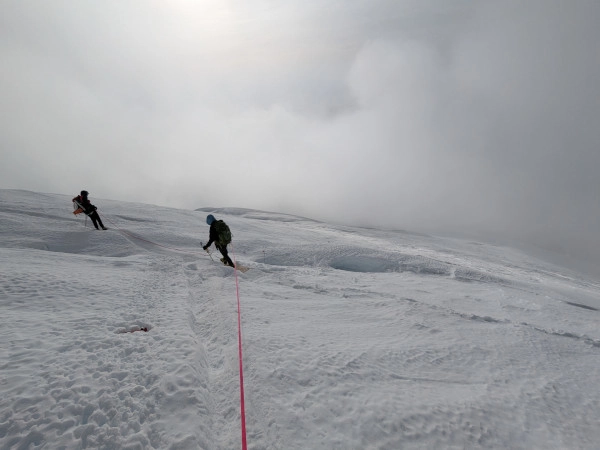
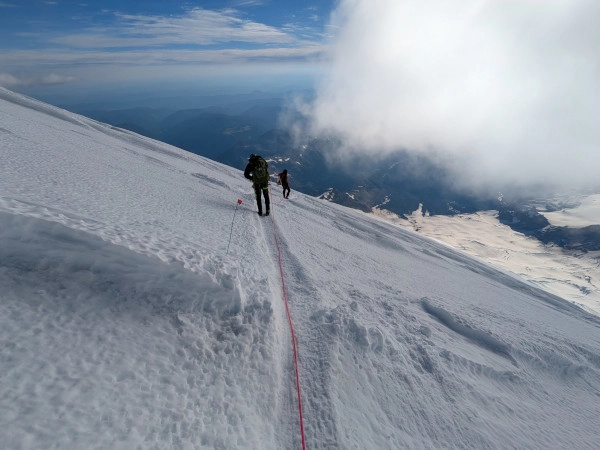
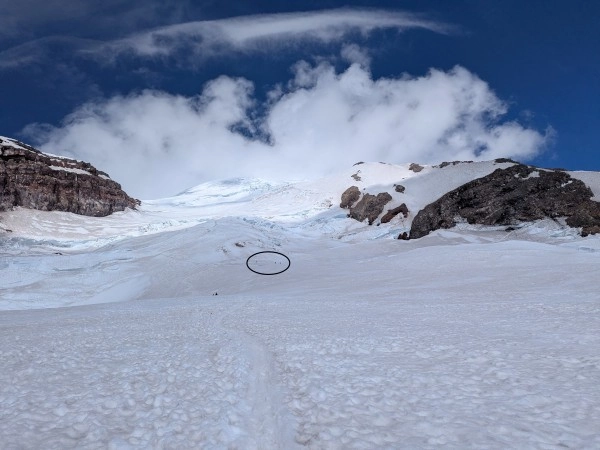
Just after 11 PM on Tuesday night, the three of us tied into our rope and started up.
It was dark—obviously—and cold. The route we were climbing was steep enough in places (30 to 45 degrees, with sections barely wider than two foot-widths side by side) that a slip would’ve had significant consequences. The three of us were roped together for exactly that reason: if one person fell, the other two would arrest the fall by digging their ice axes and crampons into the snow-covered glacier and holding tight.
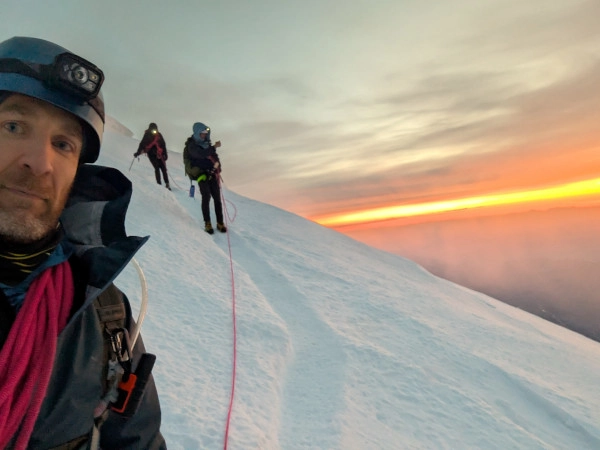
We stopped a few times on the way up to drink some water, grab a small snack, and, after reaching the top of Disappointment Cleaver (from which the “DC route” gets its name), don a Gore-Tex layer to block the wind. Every time we stopped, we checked in with each other to keep tabs on how we were feeling. The consensus was always the same: tired.
Around 6:20 on Wednesday morning—roughly seven hours after we’d started from base camp three miles and 4500 feet below—we stepped onto the summit of Mount Rainier at 14,410 feet above sea level.
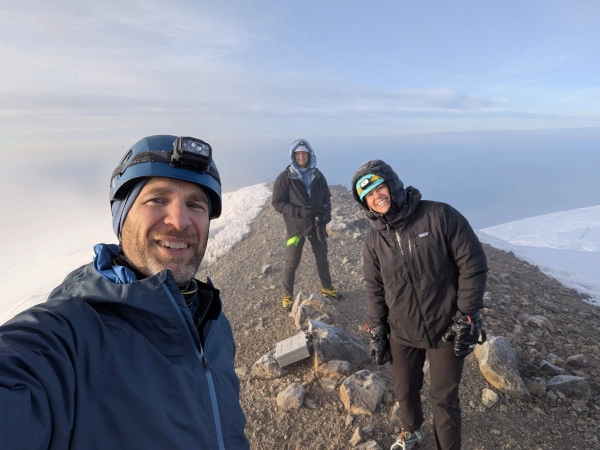
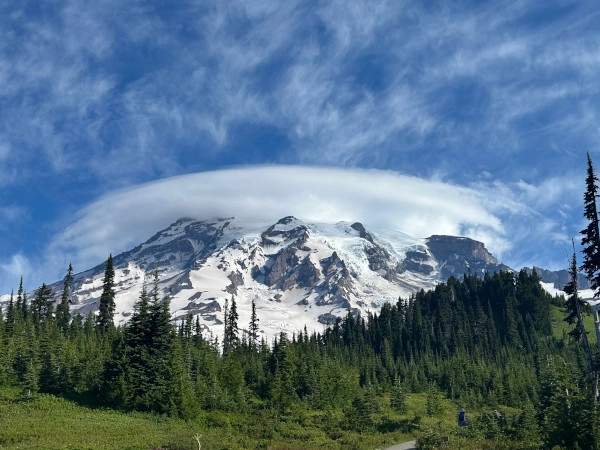
We hung around for about 20 minutes, took some pictures, and started back down (after reminding each other to stay focused because a mountain’s summit is only halfway home). About a mile from camp, one of the others mentioned that she’d questioned, at some point in the dark, whether she really wanted to keep going.
The other one said he’d had the same thought.
So had I.
But none of us had said a word about it until we were almost “done”. (We still had to hike four and a half miles and descend another 4500 feet from base camp to get back to the parking lot.)
Why had we stayed silent?
Part of the answer is obvious: we all knew that summitting mountains is hard. So we accepted how we felt because we expected it.
But there’s also a deeper, more structural reason.
Three people on a rope team means that if one person quits, everyone quits. As the person in front setting the pace, I wasn’t going to be the reason the other two didn’t make the summit. And unless one of them was showing signs of serious altitude sickness—we all had a little nausea, but nothing beyond that—I wouldn’t have let them quit either.
Because summitting a mountain—and all of the challenges that come with it—is what we signed up for.
While the rope didn’t make any of us tougher than we were, it did remove the option of a clean exit. And we all knew it.
Motivation is weather
My brother, Derek, coaches for the 29029 Everesting event—a challenge in which participants climb the equivalent of Everest’s full vertical gain in 36 hours on a ski mountain. The Sunday before our Rainier climb, he mentioned a line he’d heard from Jesse Itzler, one of the event’s co-founders, about entrepreneurs who sometimes complain when things get difficult: “That’s what you signed up for.”
While that might sound dismissive on the surface, I think it’s actually clarifying.
When you choose a hard goal—building a business, summitting a mountain, achieving a meaningful lifestyle change—you’re making an implicit agreement with yourself: this goal is important enough that I’ll persist even—no, especially—when difficulties arise. After all, challenges are what make achievements meaningful in the first place.
The problem is that most of us try to carry hard goals on motivation alone. And motivation is weather. When the sun is shining, it feels warm and reliable. But when conditions turn cold, dark, wet, windy, and otherwise miserable, it runs off to wherever the sun has gone hiding. In other words, motivation can’t be counted on at 3 AM on a glacier, when sales numbers falter, or when another long-term lifestyle goal starts feeling very far away.
But what can be counted on is structure. For example, the protocols you’ve committed to executing (like simply putting one foot in front of the other again and again)—and who’s on the other end of your rope.
Putting it into practice
Who’s on your rope when it comes to training-related goals?
If you haven’t thought about that lately (or ever), here are a few options worth considering:
- A training partner or coach who expects you to show up. The key word is expects—not in the passive sense of “hopefully you’ll be there,” but in the sense that your absence actually costs them something. A training partner who drove across town to meet you. A coach who blocked that hour for you and now has a gap. When your not-showing-up has a real consequence for someone else, the accountability carries real weight.
- A training challenge with a friend. A monthly goal—sessions logged, miles covered, whatever fits your training—that you’re both tracking and comparing. It’s easier to let yourself down quietly in private. It’s harder to text “didn’t hit it this month” to someone who did.
- An event you’ve signed up for together. A good option: an event you’re both training toward, even if you finish independently. A better one: a team-based event where your result genuinely affects theirs—a relay, a partner challenge, anything where your absence shows up in someone else’s outcome.
The rope doesn’t have to be literal. But it does have to be real.
A few more pics for perspective…