What comes to mind when I say “cardio training”? Probably words like running, biking, swimming, circuit training, light weights, high reps, heavy breathing, and burning muscles, right?
And if I said “strength training”? In that case, you might think about barbells, dumbbells, heavy weights, low reps, and long rest periods.
If that’s in the ballpark of what came to mind, you might be surprised to read about the format and effects of a training session that I’ve been doing once or twice per week for the past few months.
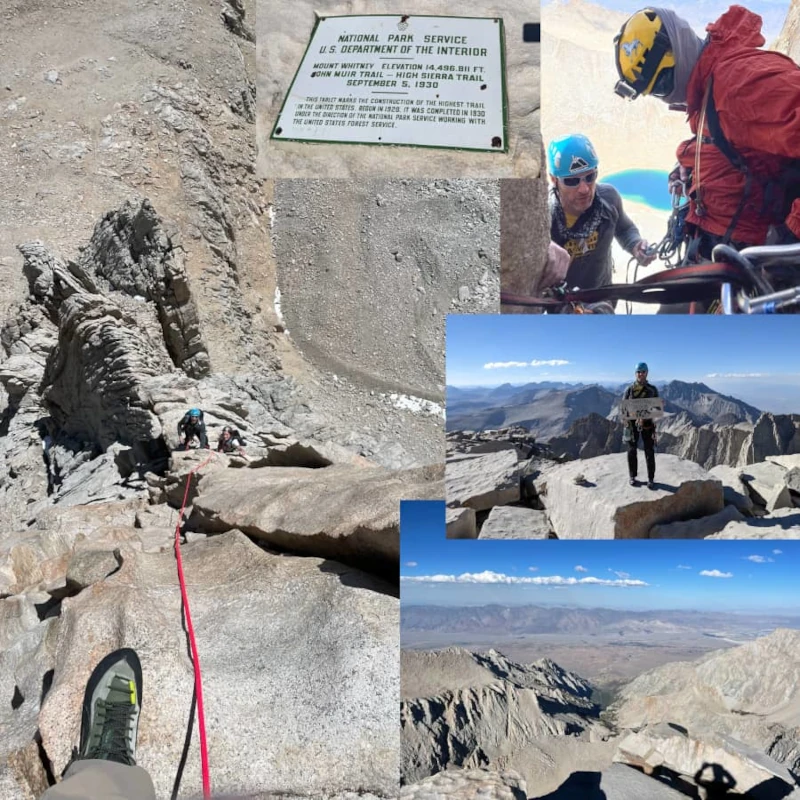
I initially added it to my routine to help me prepare for climbing Mt. Whitney with my brother, niece, and a friend at the end of June. But it’s been so effective and enjoyable—enjoyable being quite a feat considering my typical feelings about cardio—that I’m planning to continue doing it into the foreseeable future.
You should give it a try too!
What to do
In order to do this workout, you’ll need to be competent in the single kettlebell clean and jerk (or push press). Alternatively, you could probably use a dumbbell, but it may not be quite as comfortable. Of course, connect with us about a private coaching session if you don’t know how to safely perform the movements but are intrigued by the program and expected results!

Grab as heavy a weight as you can perform 6-10 quality reps, and set a timer for 60 rounds of 30 seconds (i.e. 30 minutes total).
Then do a single clean and jerk (or push press) with your right hand at the top of each minute and the same with your left hand at the bottom of each minute. Set down the kettlebell or dumbbell while resting for the remainder of each 30-second period.
Stop the session when either the timer expires or you find yourself out of breath immediately after a set.
At the beginning of the session, you may choose to do two reps (clean + jerk + clean + jerk) instead of a single rep to more quickly increase your heart rate. Just make sure to drop down to a single rep before you find yourself out of breath.
As your conditioning improves, you’ll find that you’ll be able to do two reps for longer into the session. At some point you’ll be able to perform two reps for the entirety of the session. That’s when you’ll know that you’re ready for a heavier weight.
What to expect
This workout isn’t likely to feel like any cardio or strength training session that you’ve done before. Rather, it’ll feel like a weird combination of both. Some of what you may experience is listed below. My personal experiences are italicized.
Why it feels like cardio:
- High heart rate (My average heart rate in a session is around 150 bpm. Max has reached 173. That’s 85% and 98% of theoretical max heart rate, respectively. To calculate theoretic max heart rate, subtract your age from 220. It’s not perfect, obviously. But it’s a close-enough approximation. In any case, a heart rate monitor is recommended!)
- You’re going to sweat… a lot.
- Your conditioning will improve. (I had a much easier climb on Mt. Whitney than I did last year climbing Grand Teton. The hike back to the mountain was a little shorter—about 7 miles with about 5k feet of elevation gain instead of 9 miles with about 5k feet of elevation gain—but the climb itself was higher. Grand Teton tops out at 13,775 feet above sea level. At 14,505 feet above sea level, Mt. Whitney is the highest peak in the lower 48 states.)
Why it feels like strength:
- Relatively heavy weight (I’ve been using 36 kg. That’s about what I can strictly press for a single rep.)
- Low reps (One or two reps every 30 seconds does add up over the course of a session though. Lately I’ve been hitting 45-50 reps per hand in 30 minutes.)
- You’ll experience strength improvements. (I was surprised how easily I pressed a 32 kg kettlebell for reps after having done this workout 7-8 times over a couple months. Squats have been feeling easier too. And, I hate squats… 🤷♂️)
Why it doesn’t feel like cardio:
- You won’t feel out of breath. (Particularly considering how high your heart rate will be, this is my favorite part.)
- Your muscles won’t burn. (Well, this part is pretty cool too…)
Why it doesn’t feel like strength:
- Rest periods are fairly short. (One or two reps is six or twelve seconds of work followed by 24 to 18 seconds of rest.)
Other items of note:
- Calorie tracking is an inexact science, for sure. But if you use a heart rate monitor to estimate, you’re likely to see a fairly high number. (My heart rate monitor typically shows a caloric usage of 550-600 in 30 minutes.)
Putting it into practice
If you have access to an appropriately-sized kettlebell (or are comfortable enough using a dumbbell), try adding this workout to your routine once per week. You’ll experience the best results if you commit to sticking with it for at least 3 months. But, by all means, carry on for as long as you prefer.
After that, go climb a mountain… or do some other cool challenge that you consider fun! 😉