
Have you seen the “old man balance test” that has been circulating the interwebs lately?
If not, the basic gist is this: While barefoot, stand on one foot. Pick up a sock from the floor, and put it on. Then pick up a shoe, put it on, and tie it. Switch to the other foot, and repeat. If you lose your balance at any point, you fail the test and are, presumably, old.

That said, I think we can easily drop the “old man” part and just call this a “functional mobility and balance test”. While numerous physical capabilities required to pass the test often decline with age, none of us is guaranteed to have them without putting a little effort into our physical development.
In fact, I’ve observed plenty of individuals not yet of legal drinking age who might not be able to pass as well as a handful of “chronologically advanced” individuals who could (while simultaneously telling you what they ate for breakfast).
So I definitely suggest giving the test a try to see where you stand (or fall).
And if you end up being more wobbly than you’d like (whether or not you officially pass) and want to improve your balance?
Well, you might think that standing on a balance pad/board or doing step-ups on a BOSU ball is in order. But while there are potentially a few good places to start, I’ll suggest that those two aren’t among them.
Instead, improving your mobility, posture (did you just sit up straighter?!?), and reflexive core stability is likely to have a greater effect on not only your balance but also your overall strength and resilience.
I’ll save the discussions on mobility and posture for another time. For the reflexive core stability piece, let’s cover three drills that mimic movements you naturally used during your infancy to initially build the platform on which much of your balance capabilities rest.
Upper, lower, and hollow rolling
Though it may not seem obvious, a relatively major developmental milestone during infancy is gaining the ability to move the limbs across the centerline of the body. This enables infants to begin rolling from their backs to their stomachs, which subsequently leads to lifting the (massive in relation to the body) head, rocking, crawling, and eventually walking and running.
More importantly, rolling helps to develop the deep torso muscles that contribute to pelvis and spine stabilization. And later, that stabilization contributes to the ability to balance.
So while rolling from your back to your stomach might initially seem to be child’s play, practicing doing so with a few self-imposed restrictions actually can improve your balance when standing.
Upper body rolling
The first self-imposed restriction is to use only your upper body to roll over. Start by putting one arm on the ground overhead and the other out to the side. Lift your head and look in the direction you want to roll while reaching the opposite arm across your body. Eventually the weight of your arm and head will cause you to roll onto your stomach.
To return to your back, lift the same arm toward the ceiling while following your hand with your eyes (and lifting and turning your head). Eventually the weight of your arm and head will again cause your body to roll over.
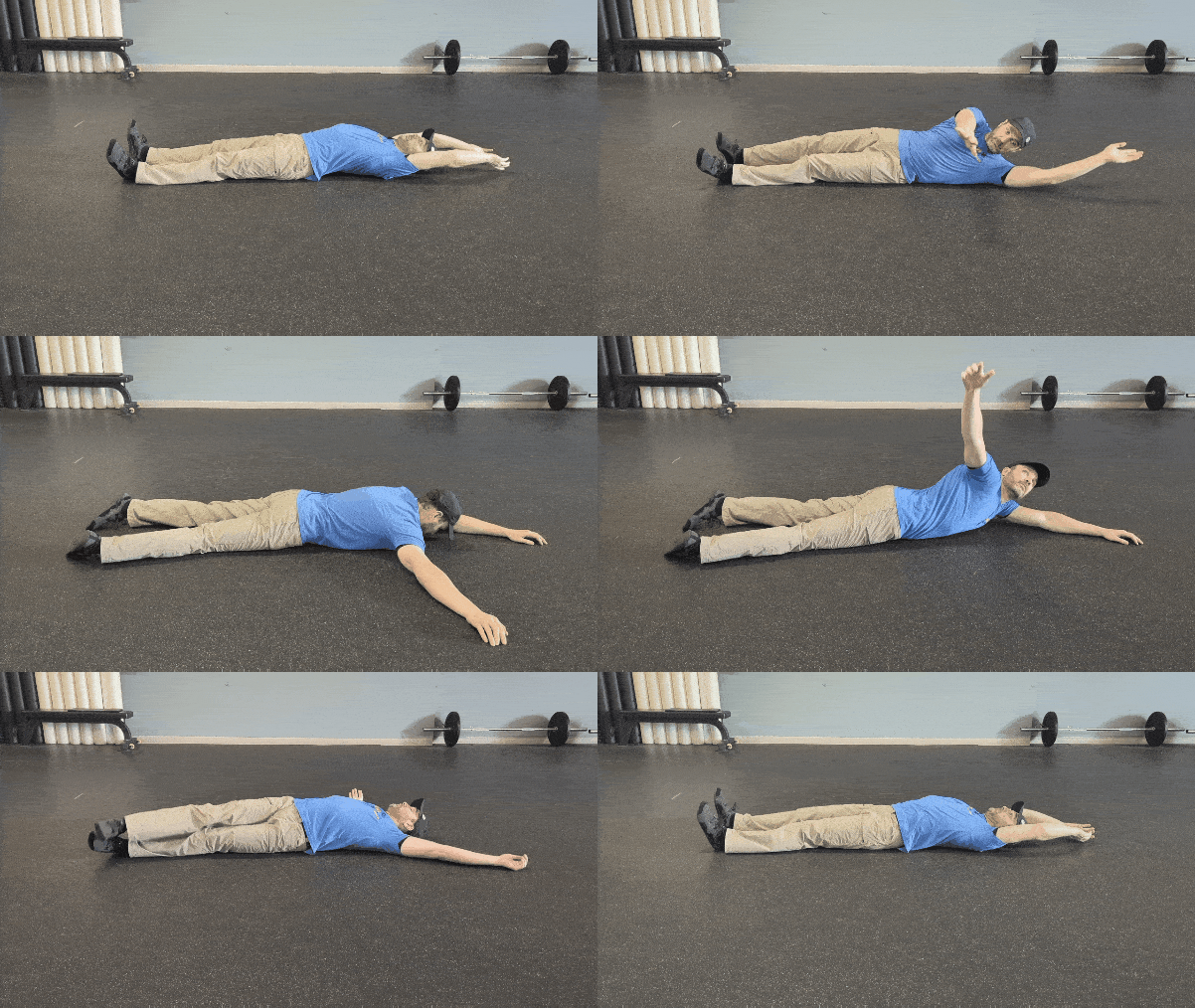
Lower body rolling
The second self-imposed restriction is to use only your lower body to roll. In this variation, both arms should go overhead to get them out of the way. To roll over, lift one leg off the ground and reach it over the opposite leg. Eventually the weight of that leg will cause the roll to occur. Once again, reverse the movement in order to return to your back.
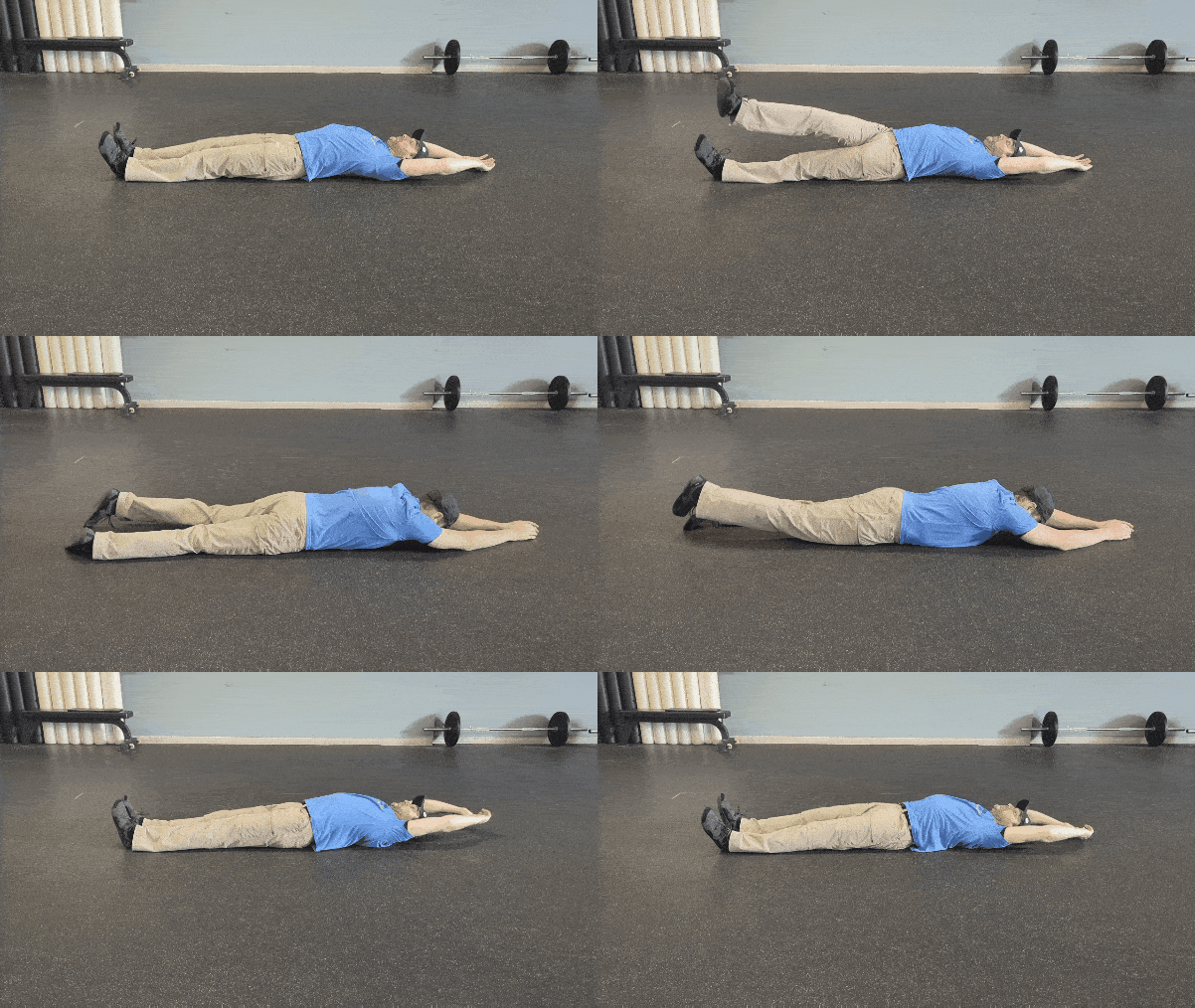
Hollow body rolling
If you found the previous two drills to be relatively easy, the following will challenge you a bit more. (And if you struggled on the two above, stick with them for awhile before trying the next one.)
The intention of this variation is to roll without touching the ground with either your hands or your feet. Begin by going hollow with your hands overhead. Start to roll by subtly shifting your arms and legs in the direction you want to move.
Transition from the hollow position to a slightly arched back as you roll onto your stomach and then back to the hollow position as you complete a full rotation. Then simply reverse the movement to roll in the opposite direction and return to your starting position.
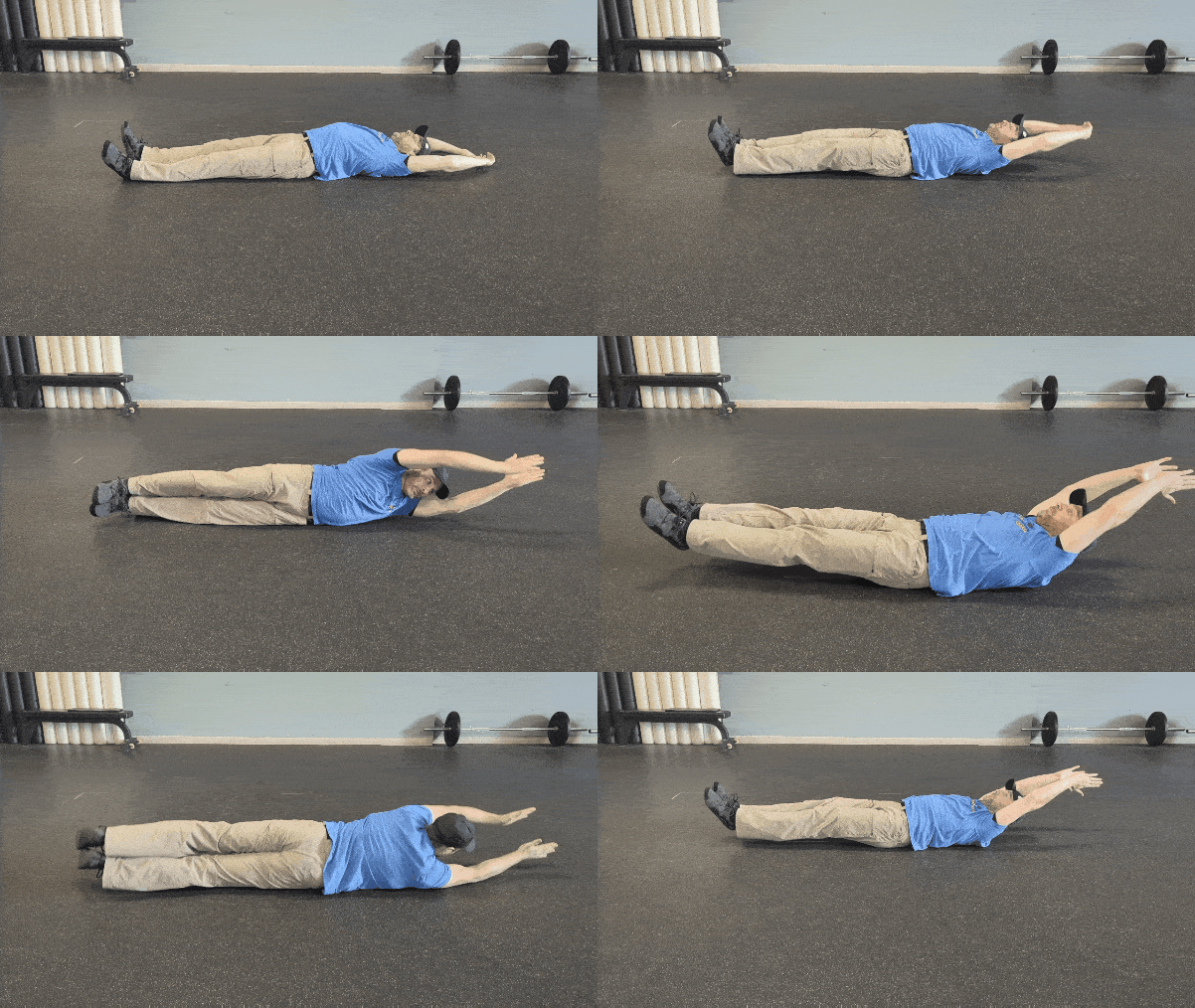
Putting it into practice
Many factors contribute to balance. So while rolling isn’t guaranteed to completely fix any balance issues you might have, it is a great place to start.
If you struggled with the test at the beginning of this tip, start the next few months of training sessions with a set or two of 5-10 reps in both directions of upper and lower rolling. If/As you are able, add another set of the limbless rolling after the other two.
Then follow it all up with a round of crawling and a couple of get-ups before continuing with the remainder of your training.
Your balance will be better, and I’ll bet you’ll feel younger to boot!