
Numerous times over the past few weeks I’ve been asked a specific, age-old strength training question: “Is it safe for my knees to go over my toes when I squat?”
Contrary to “urban gym legend” which says it isn’t, the answer ultimately depends on each of our individual structures. Lets take a look at some visuals to see what I mean.
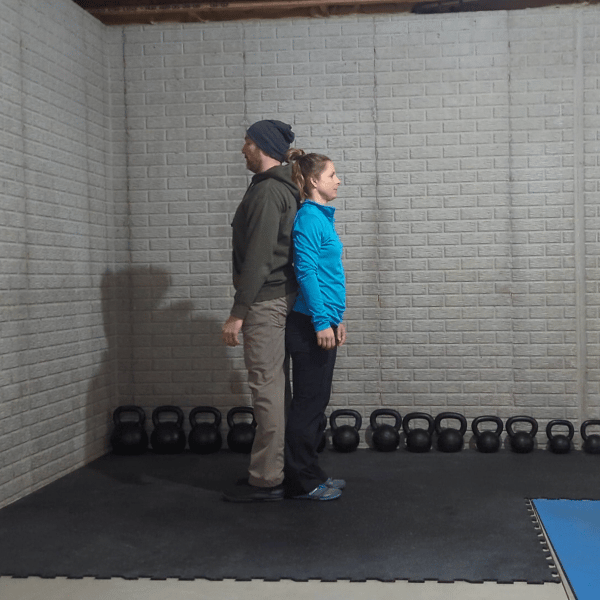
Below is a picture of Shannon (my better half) and me standing back-to-back. As you can see, I’m about six inches taller.
Except when we’re sitting, in which case she might be slightly taller than I am. (You can see from the grin on her face that she finds this fact particularly entertaining.)
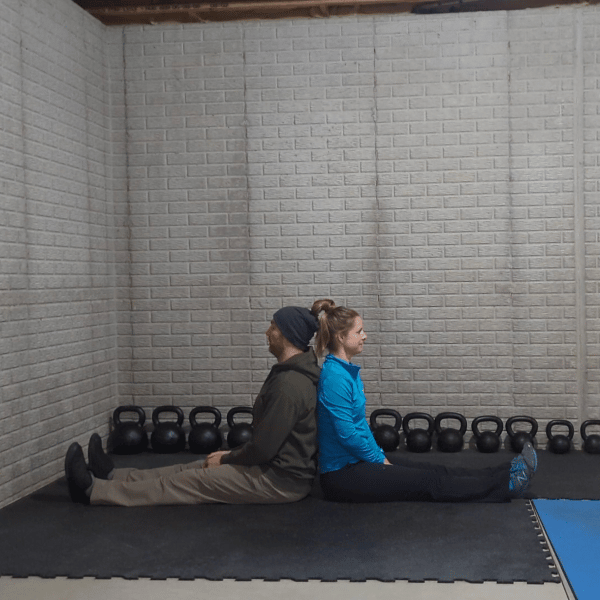
In other words, my height advantage comes entirely from my legs. And as you might guess, this difference affects how each of us look at the bottom of our respective squats.
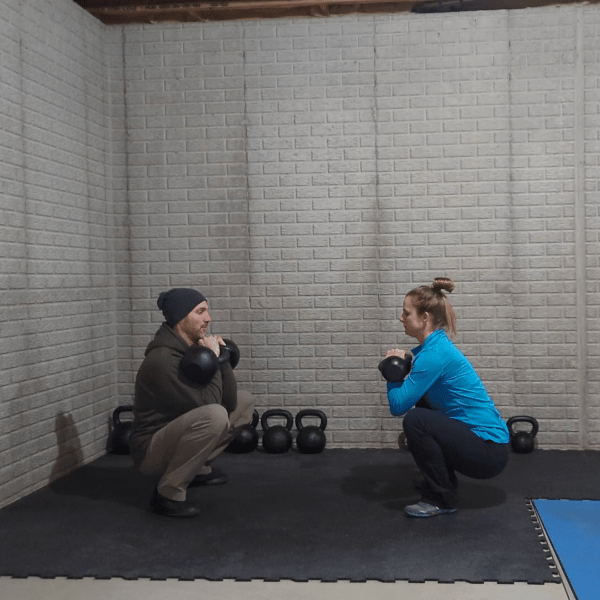
While each of our tailbones are about the same distance from the floor, the angles of our torsos and shins vary in order to keep each of us balanced.
Her relatively shorter (in relation to her torso) legs keep her knees almost directly over her toes. My relatively longer (in relation to my torso) legs make my knees drift well forward of my toes.
If she were to allow her knees to drift forward, doing so might cause her heels to come off the ground. And if I were to shift my knees (and, subsequently, my torso) backwards, the weight distribution would cause me to fall over. Neither of which is what we’re after.
So in her case, keeping her knees over or behind her toes is the better (and safer) option. In my case, knees-forward-of-toes is not only safe but also necessary.
In your case? It could be even more extreme or something in between. Ultimately, that’s for your structure to decide rather than for someone else to suggest.
Putting it into practice
Whether your knees end up behind, over, or in front of your toes at the bottom of your squat, one thing is true for everyone: your knees should track your toes. This means that, whether your toes point straight ahead or slightly outward, both body parts should point in roughly the same direction at the bottom.
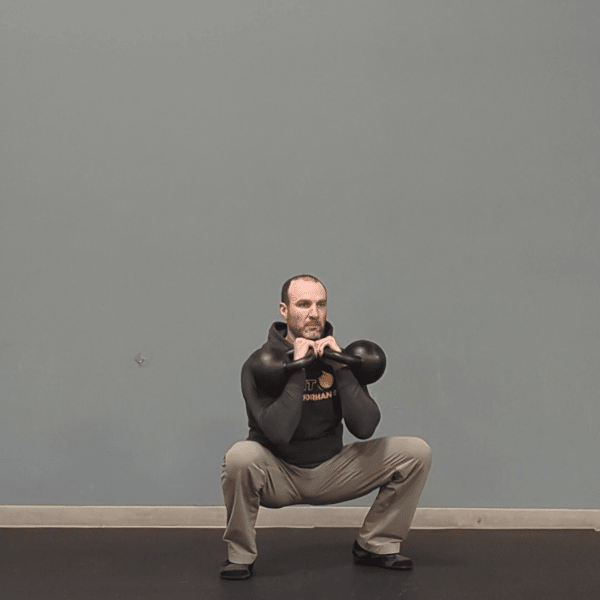
The condition where the knees drift inward is known as valgus collapse and should generally be avoided. (There are potentially legitimate cases where very strong, functional people occasionally move that way. But those cases are the exception, not the rule.)
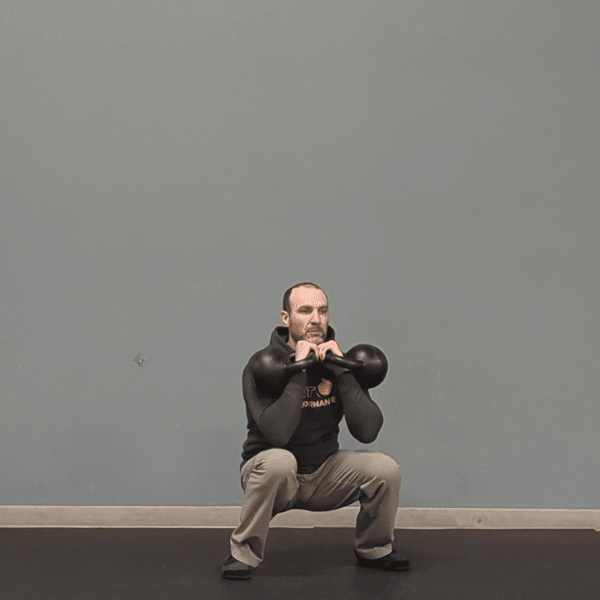
If you find that the bottom of your squat looks somewhat like the picture immediately above, connect with a strength coach to help you improve it.
But as far as “knees over toes” goes, you can effectively direct your attention elsewhere.