
Below is an image of a couple shirts that I picked up after training at Gym Jones while on a climbing trip to Utah with my brother in 2015:
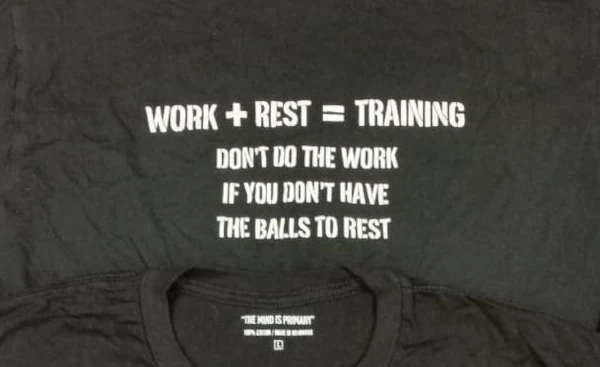
(If you can’t make out the print, the collar of the bottom shirt states: The Mind Is Primary.)
Yes, I know the second part of the top statement isn’t exactly politically correct, but neither was the gym. They didn’t have the luxury of being so.
You see, many of their members were rock & ice climbers, back-country big-mountain skiers (the kind of “crazy” people that jump out of helicopters at the top of relatively inaccessible peaks), world class alpinists, firefighters, and competitive endurance athletes. Oh, and a few movie stars to boot; they trained Henry Cavill for Man of Steel and many of the actors who played Spartans in 300.
Many of these folks were people who had very real risks of winding up broken, at best, or dead, at worst, if they weren’t physically, mentally, and emotionally prepared for the challenges their adventures would throw at them. I know that doesn’t describe the actors’ situations, but those folks didn’t necessarily have any more wiggle room either. After all, most people are probably not likely to pay to see multi-million dollar productions featuring actors who look “soft”.
So the gym was understandably more concerned with building their members’ capabilities than with trying to not offend them.
In any case, the intention behind the statement is still accurate and the point of today’s tip:
Training happens when we combine work and rest. And we should perhaps not bother even doing the work if we aren’t willing to exhibit the discipline to give our bodies time to recover. (But that unfortunately isn’t as concise and catchy when printed on the front of a shirt.)
If that seems counterintuitive, it’s only because the common theme generally promoted by the fitness industry is that “all of your progress will disappear if you’re so ‘lazy’ as to take a day or week off”.
But the reality is that the opposite is true. Tissue (e.g. muscle, tendons, bone) is challenged and broken down during exercise, whether doing strength or cardiovascular or intense stretching work. It’s repaired and upgraded when we’re resting (e.g. sleeping, using the sauna, getting a massage, easy walking, doing gentle mobility drills).
And the harder we work, the harder we also have to rest in order to recover from that work. Going hard all the time and not taking rest days is a great way to stall forward progress and increase the likelihood of injury. On the other hand, resting appropriately is likely to fast-track your progress.
How much rest is enough?
The idea of rest seems somewhat obvious when we talk about vocational work. We work for 8 hours on weekdays—plus or minus a few hours depending on circumstances—and spend the rest of the time doing other things. After a week of work, we take off on the weekend. And one to a few times each year, we take extended weekends or weeklong vacations.
Each of these periods of rest help us feel more refreshed and be more productive during our next bout of work. (As a related aside, research shows that intraday breaks—seven to 20 minutes after every 90 minutes of work—are extremely effective productivity enhancers too. Something to keep in mind for those typical weekdays!)
A similar concept holds true for “exercise work” as well. Being active in some way almost every day is a fantastic target. However, exercise intensity should vary every day, and at least one day each week—more if the average exercise intensity is high enough—should be dedicated to rest.
After every two to three months, an entire week of very low intensity activity will help you feel refreshed for the start of your next program. And once or twice per year—perhaps during those weeklong “vocational work” vacations—doing nothing more than taking some relaxed strolls on the beach, around the trout pond, through the woods, or wherever you happen to find yourself will make you feel almost superhuman when you get back to “exercise work”.
Putting it into practice
Even if you’re not a world class alpinist, ice climber, or movie star, you still need to work and rest appropriately to experience the best results. And with just a few minutes of reflection, I’m confident that you can determine whether you’re fairly balanced or need to add a bit more of one or the other to your routine.
So take the time to do so right now. Then decide how you can go about making even the smallest change in a better direction and commit to doing that regularly going forward. Your progress and future self will thank you for it.