
Looking at the heart rate dynamics from my strength-focused sessions over the past couple of Mondays reminded me of a fitness development concept that I had learned back in late 2004 or early 2005 when studying for my first strength and conditioning specialist certification: strength training promotes both strength and aerobic development while (traditional) aerobic training promotes mostly just aerobic development.
If that seems like a strange concept to you, here’s the brief explanation along with some details from one of my training sessions.
The key component of aerobic-focused training is heart rate. While there are a variety of heart-rate focused aerobic strategies, the two most common are the long, slow distance and interval methods. The former aims to keep the heart rate in Zone 2 while the latter produces heart rate spikes which often average out in the high Zone 2 or low Zone 3 range.
Ultimately, this leads to mitochondrial adaptations and improved aerobic performance (see the linked tip for more info), but it only minimally addresses the key component of strength development, especially in the upper body since aerobic training often includes leg-focused exercises like running or biking.
Alternatively, the key component of strength-focused training is muscular tension. Lifting weights requires muscles to contract. Those contractions slightly break down the muscles, and the body re-builds them stronger after the training session ends and the recovery process begins.
Lifting heavier weights or lifting moderate weights at higher speeds (e.g. kettlebell swings, barbell jerks) requires greater contractions which produce more breakdown and, subsequently, greater strength gains after repair. But it also elevates the heart rate, mimicking interval-focused aerobic training methods and producing aerobic adaptations.
In practice, it looks something like this:
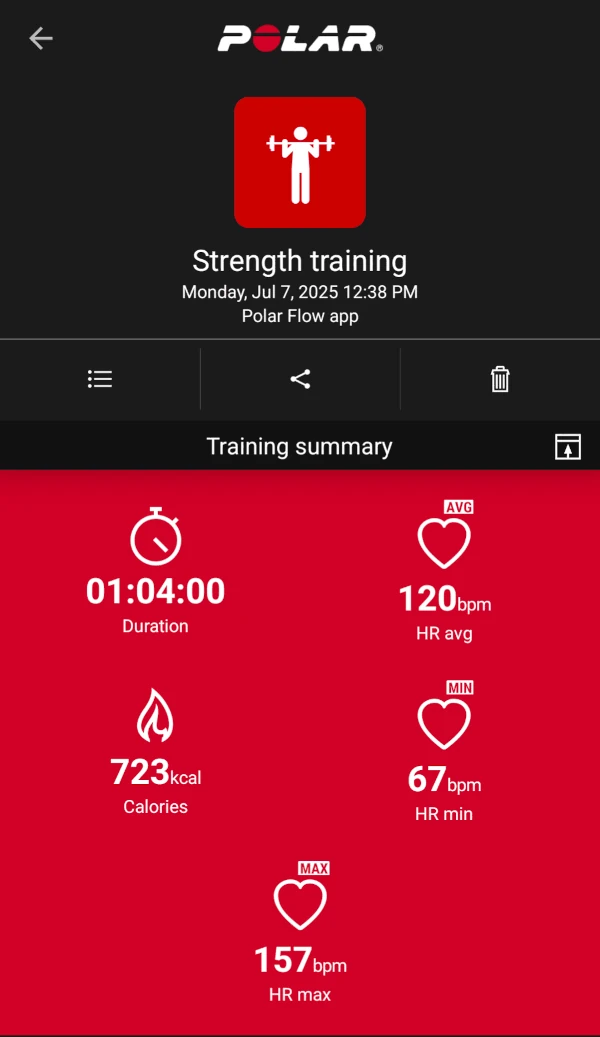
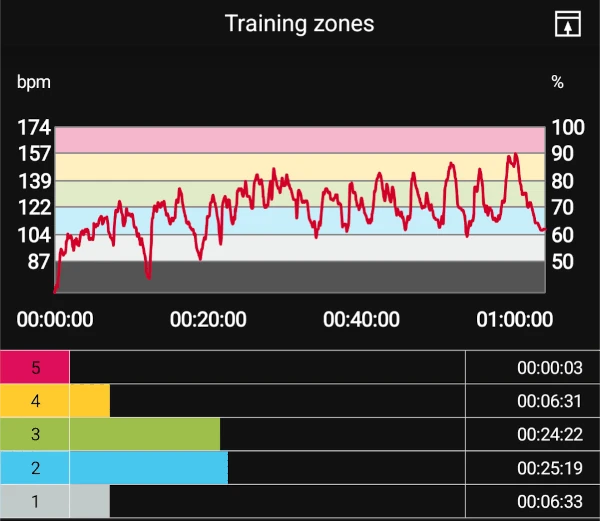
The training session that produced the results in the images above is the 2-3-5 method that I’ve described before.
Specifically for this session:
- Round 1
- Kettlebell Snatch x 2/2 (i.e. 2 reps/side) @ 24 kg
- Military Press (i.e. Standing) x 2/2 @ 24 kg
- 2KB Squat x 2 @ 2×24 kg
- Pull-up x 2 @ body weight
- Repeat all four exercises x 3 reps @ Round 1 weights
- Repeat all four exercises x 5 reps @ Round 1 weights
- Round 2
- Kettlebell Snatch x 2/2 @ 32 kg
- Military Press x 2/2 @ 28 kg
- 2KB Squat x 2 @ 2×28 kg
- Pull-up x 2 @ body weight + 10 kg
- Repeat all four exercises x 3 reps @ Round 2 weights
- Repeat all four exercises x 5 reps @ Round 2 weights
- Round 3
- Kettlebell Snatch x 2/2 @ 36 kg
- Waiter Press (i.e. holding onto the “bell” part of the kettlebell instead of the handle) x 2/2 @ 28 kg
- 2KB Squat x 2 @ 2×32 kg
- Pull-up x 2 @ body weight + 20 kg
- Repeat all four exercises x 3 reps @ Round 3 weights
- Repeat all four exercises x 5 reps @ Round 3 weights
All of this adds up to only 30 reps per exercise—technically 30 reps per hand for snatches and presses—for 180 total reps in an hour. Which averages out to a whole 3 reps per minute.
Neither the reps nor the weights fall into the range of what most people would call aerobic training, yet you’d likely never have guessed that had you only seen the heart rate charts.
Putting it into practice
If you’re training for a specific endurance event such as a triathlon, back country hiking trip, martial arts tournament, or the like, doing some “sport-specific” training is still recommended.
But regardless of goal, strength-focused training arguably should be the base on which everything else is built as it produces a far greater variety of benefits than most people expect.
So if you’re currently participating in some form of strength training, keep it up! Hopefully this tip helps you recognize some benefits you may have been overlooking and inspires you to approach your training with a renewed sense of vigor.
And if you’re not currently doing any strength training… Well, start small. But do start. It’ll affect your life more than you might currently imagine.