
If you’re relatively new to training, then just about any activity or reasonable training program will yield some improvements to your strength, endurance, and mobility. But after you’ve progressed beyond the beginner stage, understanding and applying some key principles are necessary to continue experiencing noticeable progress.
Two of the broadest of those principles may seem somewhat contradictory but are actually perfectly complementary:
SAID principle
SAID is an acronym for “specific adaptation to imposed demands”. It’s the fancy but brief way of saying that our bodies adapt exactly to whatever stimuli we expose them.
Want to get stronger? Lift something heavy (for you).
Need better endurance? Perform activities that tax the cardiovascular system.
How about being able to generate more power? Move weight (or yourself) progressively faster.
Stiff and want more flexibility? You guessed it; you’re going to need to do some stretching.
This may seem like a fairly simple and obvious principle on the surface. But dig a little deeper and you’ll find that, as it turns out, the body is pretty darn good at adapting. And after a rather brief period of just a few weeks, continued adaptations will either slow or stop if you continue doing the exact same thing.
This lack of continued progress without relatively frequent change of stimuli almost certainly gave rise to the concept of muscle confusion. That is, the idea that “muscles won’t adapt unless they experience constantly varied stimuli”.
Unfortunately, muscle confusion takes the concept just a little too far.
From a physiological perspective, everything (including adaptation) comes with a price. Having too much consistency means adaptation will eventually stall once the body has become capable enough to handle the unchanging challenge. But having no consistency leaves too short a runway to generate any progress because a specific adaptation may not be worth the price if the related challenge is experienced too infrequently.
What we need for continued progress is something in between. Enter principle number two.
Same, but different
As the name implies, we want to walk the line between no change of stimuli and too much change.
While there are numerous ways to apply “same, but different” to program design—e.g. reps per set, total volume, weight/intensity, rest periods, density, sessions per week—there’s not nearly enough space in this tip to cover all considerations.
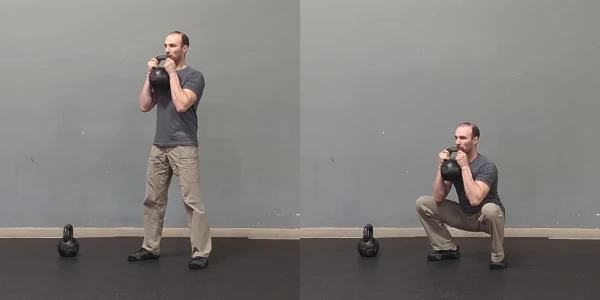
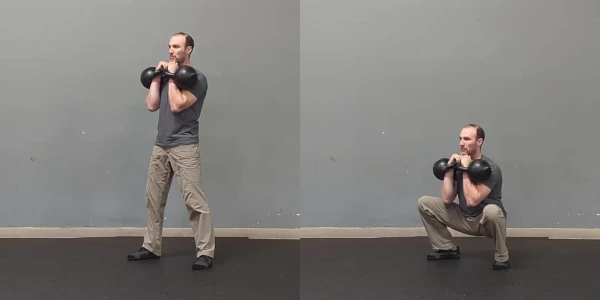
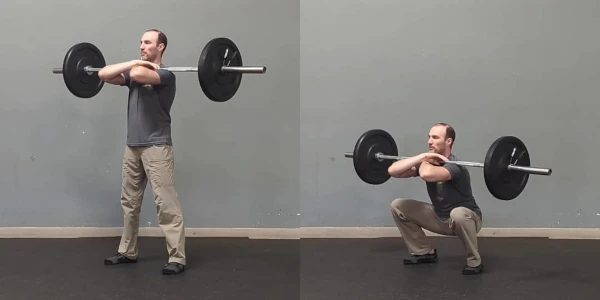
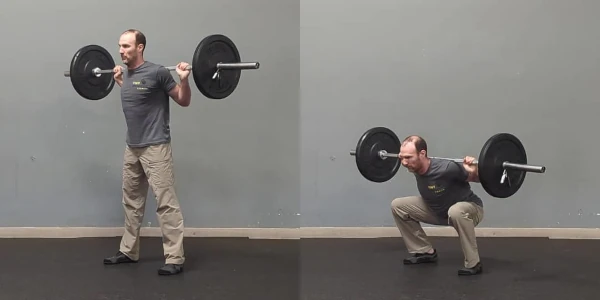
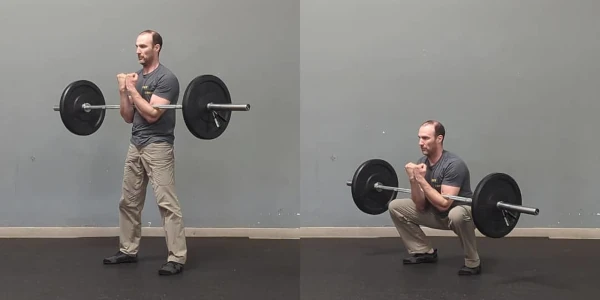
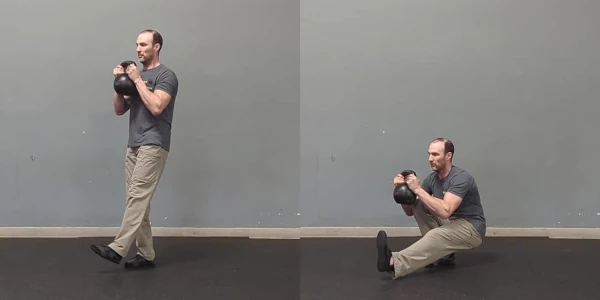
So to get the point across, I’m going to use some pictures to show one of the ways this principle can be applied: using different exercises for a single movement pattern, the squat in this case.
As you scroll through the following pics of the top and bottom position of six different types of squats, notice two things:
- First, how each of the top positions and each of the bottom positions are basically the same across all variations.
- Second, how the depth at the bottom, torso angle, arm position, and position of the weight varies slightly across all variations.
While you likely wouldn’t use all variations within a single training session, either alternating between a couple variations from session to session or sticking with a single variation for 4–6 weeks before transitioning to a different variation encompasses the essence of the “same, but different” principle.
Putting it into practice
If you’ve been training intentionally for more than a few months, consider both your results and your programs from the past 3–6 months.
Where have you noticed the greatest progress? And the least?
Particularly in the latter case, in what ways have (at least part of) your programs been:
- Too much the same?
- Too different?
- Producing adaptations to some characteristic which you deem unimportant?
Understanding the answers to those questions is the first step to increasing the probability that your next program—and the next, and the one after that—will produce the results you’re after.